Australian National Budgerigar Council


Seed Of Nostalgia Jan 2026
WHEN, WHY, HOW ?
By RON HUNT
The Second World War put a stop to many activities including the Bird Fraternity. I was born before then (so I’m not a baby boomer), but my Grandfather and Father were both interested in birds and that was passed on to me.
In 1943, the year Pearl Harbour was bombed, my Father’s boss gave me some Cage Bird Magazines .I started reading at an early age and through these magazines I was introduced to bird shows, bird clubs, debates on ideal birds, the formation of Standards and fully involved in the keeping and exhibiting of various types of birds.
If anyone would like to read about Silvers, Apple Greens, Whitewings, etc. Mr. R.B. Browne shared his knowledge of them in articles in “Australian Cage Birds 1936- 1937” and his in-depth knowledge of birds puts a stop on the theory of there being two mutations of Greywings. At the time that meant little to me until the 1950’s.
In those early years after the War we had a number of organisations contributing input to the bird world including The Royal Zoological Society, The Australian Budgerigar Council, The Canary and Cage Bird Federation, and many other Societies affiliated with the Canary and Cage Bird Federation. They were all putting forward ideas and ideals (and many of them) on Shows and Standards. By the mid 1950’s the Canary and Cage Bird Federation became the ruling body when it came to bird Shows rules and regulations.
I had now joined the Sydenham-Bankstown Avicultural Society and was keen on budgerigars, drawn by their range of colour and markings, unlike my Dad’s canaries where blues were grey and greens were heavily marked birds.
It was obvious that sooner, rather than later, I would be a budgerigar breeder and exhibitor. By this time, I had some money to go from pet shop to pet shop to buy, and buy I did! In hindsight, with little thought at the time on the Standard as I was looking for colours. However, the next step came when a friend from Croydon Park asked me to help take his birds to a Show. Having no means of transport, we carried four cages each on a very long walk to the Show being held in a fellow member’s backyard. These so-called “Lawn Shows” were always low-key affairs with between 200 and 300 birds, but plenty of time to ‘talk birds’, find out how the breeding season was going etc. I was looking around the exhibits when one of the top breeders of the day came up and asked if I had any questions about the birds. I did. “How does one win and another run out of a placing?” The class numbers I might add were usually 8 to 12 birds per class so he had plenty to show me pointing out faults and strong features which I have been looking for ever since.
Our birds were exhibited at Shows combined with Canaries, Finches, Parrots all judged at a leisurely pace by the judges of that variety of bird. They were entered on the Friday night, judged on the Saturday, and opened to exhibitors on the Sunday, where they keenly discussed the results and thought about their next show.
These were great days, but the costs of halls were increasing. In conjunction, time for people being away from home when they had family commitments, and the associated travel costs, were beginning to have their impact. Nevertheless, these were exciting times for budgerigar breeders and specialist budgerigar clubs were opening up all over Sydney. I for one (now a teenager) joined the Yagoona and District Budgerigar Society but continued to exhibit at mixed Clubs. These included Sydenham-Bankstown, North Ryde, Rockdale, Fairfield, Blue Mountains, Granville, Parramatta, and Picton that I can remember. Some of them were A.P.S.C. Shows where exhibitors would try to ride the bucking bulls!
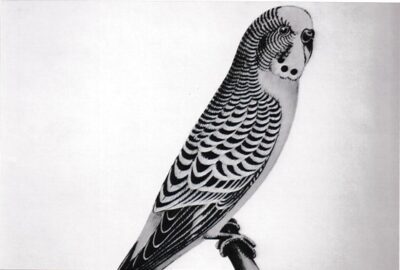
During the 1950’s Harley Yardley, the man who bred beautiful Clearwings like the one on the old Club Badge, was President of the Budgerigar Society of Australasia. He would go to the other club meetings, asking them to become members of the B.S.A. His punchline was ‘Together we stand, divided we fall’. The wisdom of that was recognised, and so most clubs then became branches of the B.S.A, with my Club changing its name to the Padstow Branch. Others I remember were Northside, St George, Illawarra and Western Area. Then we pooled our resources to run the B.S.A. Annual Show, print Standards, train judges and combine for insurance purposes.
The Annual Show was beginning to become a problem before the merger as each club felt it was someone else’s job, but we were saved by our patron, Sir Edward Holstrom. He procured the Sydney Town Hall for the venue of the annual Show, donated most of the prizes and secured the entries of between 1000 and 2000 exhibits and Dr Harold Cooper as Show Manager. As we started to reach these high numbers of exhibits, things were really changing for the Budgerigar exhibitors in the 1950’s, 60’s and 70’s, but with the Canary and Cage Bird Society dominated by Canary breeders—who used their majority on the Committee to block many of the motions put forward by Budgerigar breeders—it became clear that something had to be done to suit the interests of the budgerigar exhibitor. So,
- Instead of only panicum seed being allowed in cages at the Shows we wanted to use an accepted seed mix.
- We wanted to allow us to have a plastic split ring on the leg that did not have the recognized breeders ring on it. This would make it easier for the breeders of recessive varieties to identify in the flights without having to catch the bird first and to not accidentally cull the bird. The ring issue date did not suit our birds and neither did the definition of a Young bird. Dr. Harry Cooper moved that we drop out of the Canary and Cage Bird Federation and make our own rules, seconded by Ron Hunt and carried unanimously.
This made a vast difference to budgie exhibitors. Dr Harry had put the idea to the BSA Management Committee as well as a motion that the B.S.A. Show Manager be elected for 12 months and that he /she be empowered to select their own Show Committee This was passed at the next meeting.
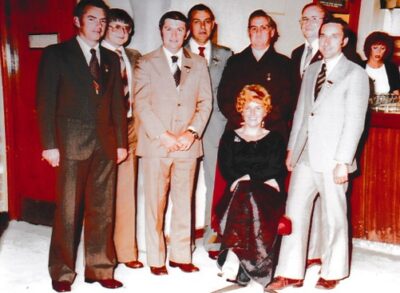
The first Show Committee members with Dr Harry as Show Manager were Bruce Bradford (Show Secretary), Col Morgan (Assistant Show Secretary), Jean Painter (Trophy & Prizes Manager) and Ron Hunt (Publicity Officer and Chief Steward). Over the years, several others joined them and came on board with other positions to assist with the running of the Annual Shows, State Team Selections & Competitions, Annual Dinners and other things that management passed on. These original few carried on successfully for several decades.
It was a great period when Branch Shows were fielding 1000 birds plus or minus a few and the Society’s Annual Show at Rose Bay had up to 1800 when we had to have 10 judges on that day. Many things were happening during the 70’s and 80’s. Some were the making of the hobby, while others set us back a bit. One major plus was the creation of the Australian National Budgerigar Council (ANBC). This brought fanciers from all States together and was the catalyst in forming a National Standard for our ideal exhibition budgerigar, a National Show Cage, and a rotational venue for the event to be hosted by a different state each year.
The idea of a National Show came about when a group of fanciers from Victoria, South Australia and New South Wales put their heads together at the Griffith Bird Society Annual Show in 1971 – a popular Annual event for bird breeders from our three States. It gave birth to the first National held at Kensington, Victoria in 1975. There were only 11 classes with the most dominant varieties to encourage the States with fewer members to be part of the competition. The early Shows were run by the host State Judges, Standards and cages. This led to early problems, so a working committee was formed to refine the rules, Standards etc. The Committee consisted of Colin Morgan from N.S.W, Harry Eady from Victoria, and George Duffield from South Australia.
The next problem was to have only qualified judges to judge the National Shows. To be qualified for this State, Judges would need to sit a National Examination. In 1989, a group of judges who were qualified Senior Judges in their home State were brought together to form an examining panel and devise a suitable exam. This group of people were Harry Eady from Victoria, George Duffield from South Australia, Ron Hunt from New South Wales, Barney Hackney from South Queensland, Henry George from South Queensland and Dr Harold Cooper from Tasmania.
The decision was that candidates for examination would need to be Judges of a few years standing in their home State and endorsed by their State Management Committee. They would first have to sit a theory examination and pass with a high percentage mark. If they passed, they would then judge two classes of 10 birds in each and place them correctly in order of merit as the examining panel had done prior. One class would be a Normal class of Green birds and the other would be a mixed variety class. Importantly, the judge would have to satisfactorily explain their order of placing the birds, as well as identify the colour and variety of the birds. This also had to be completed in a given time frame. The examining panel of Judges were allowed to claim travelling expenses.
Both of the above committees were formed without any objections from the States and proved invaluable in creating the high standards we have today. However, when it came to establishing a National Show cage, that was a very different story. The States raised serious objections to any deviation of the Show cages they were using, so the answer was to design a completely new show cage favouring none of the existing cages and that’s what happened.
The Budgerigar Society of Australasia was the only member body of the A.N.B.C. with a National Title, so on the 17th January 1994 the B.S.A. notified Consumer Affairs that the B.S.A. had changed its name to the Budgerigar Society of New South Wales Incorporated. This change was welcomed by all other members of the A.N.B.C.
The then B.S.A. was scheduled to host the National event in N.S.W. in 1979. Having previously hosted the Nationals in 1976, we were well aware of the cost to run the event and felt we had to raise more money somehow, so the idea of an auction was well received as a fund raiser. The auction was held at Gladesville R.S.L. in 1978 and turned out to be quite successful. Auctions have now taken the place of sale days and I personally feel that they have left a hole when it comes to learning about the varieties, as well as breeding and pairing techniques. This is why Black Eyed Yellows are Green, Greywings are shown as Clearwings, and Normal-lines are shown as Opalines.
The seller in those days had a fixed price on the birds for sale with the best birds being the highest prices. Each buyer was only able to buy two pairs and could call back at a later date for information on the bloodlines of the birds, the feeding regime they were used to, and see the parents and siblings. It was a pleasant day at the home of the seller usually with morning/ afternoon tea supplied and an opportunity to “talk birds”. Many friendships were formed from days such as this, and newcomers seemed to stay in the hobby longer. The only competition was to try and be the first buyer in to look at the sale birds. It meant getting out of bed earlier than usual as the rule was “first in, best dressed”. The first to be there would get their name written as first on a list or receive a ticket with the number one on it. It had a time limit set for your time allowed to choose the birds you wanted.
Today, the problem with auctions lies in the high prices that the top birds go to, and youngsters just cannot afford them, so they come away disappointed and settle for other bird species or computer games etc. instead. Mum and Dad are guilty of saying “you can buy better birds when you are earning money”. Problem is, kids can’t wait that long, so are lost to our hobby.
Please note that this is not meant to be a history of the development of the A.N.B.C. but is just development and changes that I personally have noted and enjoyed being part of. I would dearly like to see the hobby go back to creating budgerigars with the varietal features as described in the Standard, and not near enough being good enough. I am sure that different varieties attracted different people to the hobby, who were very proud of achieving ‘Best Recessive Pied In Show’ because the bird was an excellent example of what we admire in that particular variety, with the ideal markings and colour. Remember all changes do not always help the hobby.
It is worth noting that all the organisations since the 1930’s have not been able to bring the top budgerigars and the most dedicated fanciers together to compete at the same venue each year, as the A.N.B.C. has been able to do since 1974. We should remember this and promote and protect this organisation that has worked hard to bring all the fundamentals together.
Ron Hunt
|
|
|
|
|
|
|
|