Australian National Budgerigar Council

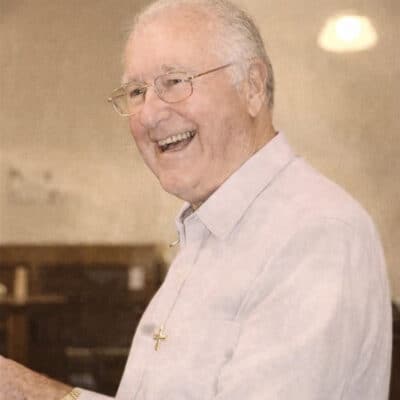
George Duffield – a builder of the national framework
If you trace the history of exhibition budgerigars in Australia, you quickly realise the hobby didn’t become “national” by accident. It took a small group of people who were willing to travel, negotiate, and commit their state to big responsibilities. Then, they did the unglamorous work of writing standards, shaping judging systems, and keeping the wheels turning. These were the founding father’s of todays National competition.
George Duffield (South Australia) sits firmly in that foundational group. He’s remembered not just as a respected fancier, but as one of the practical organisers who helped turn early ideas into the structure we still rely on today.
From an idea to a national movement
The ANBC’s history records that serious discussion about a national teams competition was underway by 1972. George Duffield was brought in alongside other leading fanciers to help generate broader support and momentum.
Those conversations became reality in 1975 with the first teams competition held in Melbourne (Kensington). Victoria, NSW, and South Australia competed. That year, George won the Black Eyed Self Class and went on in 1994 to win the Clearwing Class. In addition, the ANBC history positions George as one of the South Australians involved in the early push that made a true interstate competition workable.
Just as importantly, later ANBC Gazette history notes that at Rose Bay (1979), George Duffield and Stan Watson committed South Australia to hosting the following year’s challenge at Flinders University in Adelaide. That was one of those decisive “yes, we’ll do it” moments that helped the National competition rotate, grow, and attract wider state involvement.
A founding father recognised for service
In October 2009, the ANBC created a Service Honour Roll division within its Hall of Fame. In May 2010 it inducted five “founding fathers” into that division, George Duffield included. George’s Hall of Fame recognition is explicitly tied to service and organisation-building. It recognises the behind-the-scenes leadership that made national competition possible and sustainable.
Building “The Standard” Australia could share
A national show needs more than enthusiasm; it needs common benchmarks. One of George Duffield’s most enduring contributions was his role in creating a National Standard.
Both ANBC and BCSA historical summaries record that a National Colour & Standard Committee was established in 1985 to produce a Standard for ANBC championship shows, and that this work was completed by Colin Morgan (NSW), Harry Eady (VIC), and George Duffield (SA), with printing assistance added later. That committee’s work culminated in the release of a revised national standard in 1990.
This is the sort of legacy that’s easy to underestimate, because it isn’t a trophy you can photograph. But every time a breeder talks about “breeding to The Standard”, the legacy lives on. Also, every time a judge aligns a placing to the written criteria, and every time a state team competes on a shared foundation, George Duffield’s influence is present.
Strengthening National judging: consistency and credibility
Alongside standards, national competition requires trusted judging systems. As the nationals matured, the hobby moved toward ensuring only qualified judges officiated. In Yeppoon (1989) a group including George Duffield (SA) worked on developing the judging panel and exam approach. George wasn’t only part of “what the perfect budgerigar should look like” on paper; he also contributed to “how the art of judging should work” at the top level, helping build confidence that national results were being decided under an agreed, credible process.
Wider aviculture leadership in South Australia
George’s contribution extended beyond budgerigar circles into the broader avicultural community. The United Bird Societies of South Australia history records that when the organisation formed in June 1979, Mr. George Duffield was elected as one of the inaugural councillors. He represented the Budgerigar Society of South Australia. A steady hand, trusted to represent the budgerigar fancy in a wider state-based avicultural context.
His passing, and the “quiet weight” of legacy
A brief Vale notice published in the North East Budgerigar Society magazine (April 2020) notes that long-time member George Duffield had passed away “earlier this week.” With people like George, their importance is often most visible in the things that continue to function after they’re gone. For example, the national structures, the standards, the judging systems, and the culture of taking responsibility for the next show, the next committee job, and the next set of rules that need tightening all continue to run because of their influence.
Why George Duffield matters to today’s fanciers
For newer fanciers, it can be tempting to see the ANBC as something that “has always been there”, be that a calendar fixture, a process, an established tradition. George Duffield’s biography is a reminder that:
- National competition required advocates across states to turn early conversations into real events.
- A national show needed a National Standard, built by knowledgeable fanciers willing to do the hard drafting work.
- Judging credibility at the top level needed agreed exams and frameworks, not just goodwill.
- Strong state representation often comes from people who step up repeatedly, both locally and nationally, without chasing the spotlight.
That is George Duffield’s story in the historical record: a builder, a stabiliser, and a South Australian whose service helped shape the national stage we all benefit from today.