Australian National Budgerigar Council


Siegfried Szesny Frederic Klenner 2026
Partnership of Siegfried Szesny – Frederic Klenner
from Dorsten / Rhade, Germany

Upon entering the breeding facility of Siegfried Szesny and Frederic Klenner, one immediately notices how clean and well-maintained the entire stud is. There are two breeding areas that are physically separated by a room that serves as a feed preparation area. One side is managed by Siegfried, the other by Frederic. Breeding takes place in these two rooms with a total of 60 breeding boxes. Siegfried has 24 cages available, and Frederic has 36. Their breeding season begins at the end of October of the beginning of November and usually is completed by the end of May.
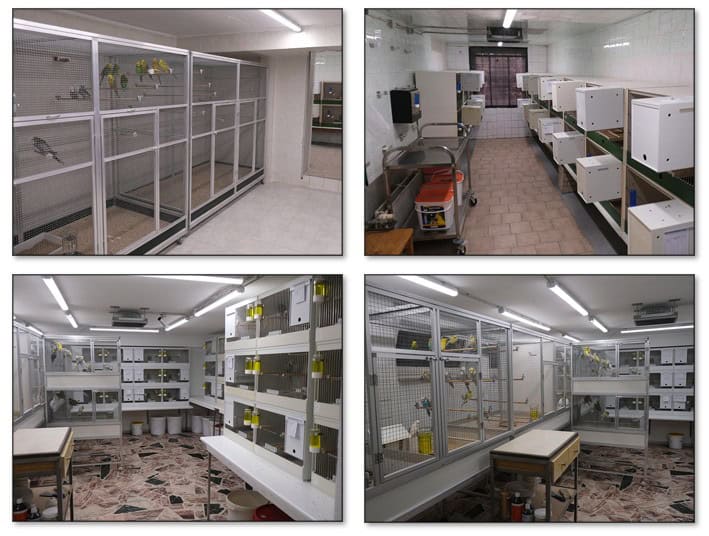
Siegfried’s passion are Opalines and Dominant Pieds. All 24 of his boxes were occupied at the time of my visit, and he told me that things are going very well presently. Many eggs were fertilized, and there were several chicks in the breeding boxes.
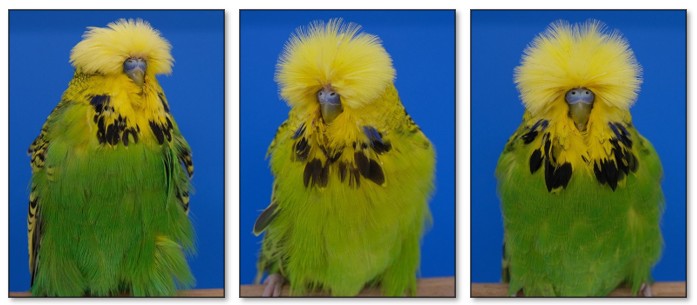
The situation, variety wise, is different for Frederic. He breeds almost all colors. All his breeding boxes were fully occupied on my visit, and here too, the fertilization rate was very high. It was immediately clear that both Siegfried and Frederic have a vision of what a show budgerigar should look like now and into the future.
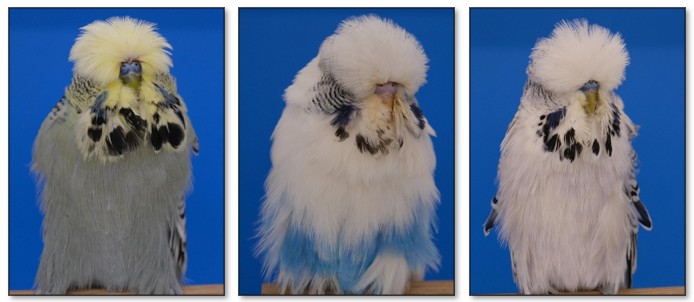
The foundation of their birds is traced back to the breeding program of the first European Champion, Albert Schäfer from Haltern, Germany with whom Siegfried exchanged birds for over 20 years. Furthermore, budgerigars from England and from Jo Mannes (Germany) were introduced into Siegfried’s breeding program. Frederic received his first birds from his father’s breeder friends in the Netherlands and combined these with birds from Siegfried’s lines from the very beginning.
A major turning point came in 2018, when they acquired the entire breeding operation of S. Moke (Germany) following his retirement from the fancy. These birds, together with their existing foundation stock, now form the core of the Szesny/Klenner breeding partnership today and have led to an improvement in their breeding rate. Additional birds have been purchased from renowned breeders in Germany, the Netherlands, and Switzerland. All birds are now line bred, with regular cross‑pairing between both sides of the partnership to maintain a balanced and unified strain. This approach also allows new acquisitions to be evaluated more accurately for genetic compatibility and long‑term value. The varieties bred include Normal, Cinnamon, Opaline, Cinnamon Opaline, Spangle, Dominant Pied, Recessive Pied, Inos, Lacewings, Texas Clearbody, Dilutes and Yellowface.
A total of 300-350 offspring is bred annually. For their own breeding program and show entries, 300 birds are kept, consisting of 50% cocks and 50% hens. The flock is further divided into 50% older and 50% younger birds. Both believe this increases fertility – a theory worth considering.
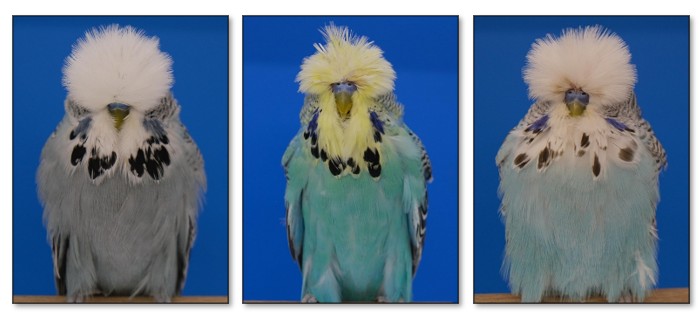
The birds are fed year-round with the Jo Mannes mixture from Versele Laga. Vitamins are regularly added to the water. Many of the products used were taken from the grandfather’s racing pigeon diet and have been successfully tested in their own breeding program. During breeding, the birds are fed a specialized rearing feed consisting of numerous components (Witte Molen egg food with K-1, Deli Nature WS single feed, Versele Frutti Pattee, rolled oats, sprouted oats, weed seeds, grit, and much more).
Before the start of the new breeding season, the selected breeding birds are given a conditioning product from the racing pigeon industry to optimally prepare them for breeding.
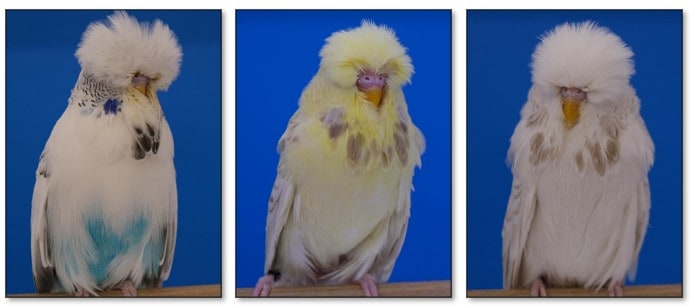
They are exhibited at various local group shows, including the DSV National Show, AZ State Shows, and occasionally at the AZ National Show in Kassel and the European Championship in Karlsruhe.