Australian National Budgerigar Council


Alan Gina Adams 2026
A & G Adams — A Lifetime Devoted to the Budgerigar and the Ultimate Success in 2025
Alan’s journey in budgerigars began at the age of eleven with a simple pair of pet-type birds. What started as childhood curiosity soon grew into a colony aviary in his parents’ garden, and eventually into a lifelong passion for the exhibition budgerigar.
Gina entered the hobby in 1996 after meeting Alan, quickly developing her own interests — particularly Recessive Pieds and Crested — while Alan continued to focus on the Normal varieties. Today, the stud is very much a partnership, with both working side-by-side under the well-known show name A & G Adams.
The Stud and Its Management
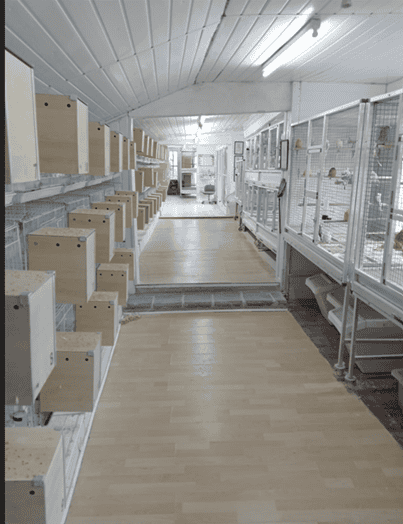
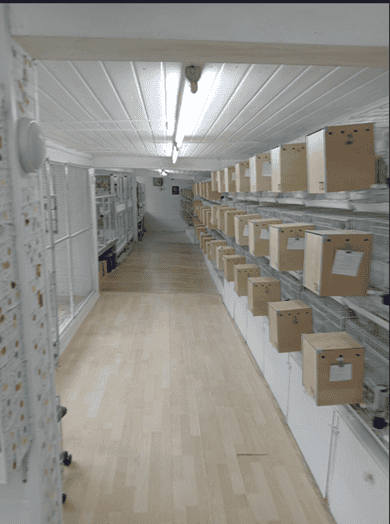
Their birdroom is an impressive structure: approximately 80 feet long and 15 feet wide, with breeding cages running the full length of one side and spacious flights along the other. A kitchen area with running water sits at one end, and the entire shed benefits from continuous ventilation through long banks of opening windows — a feature they consider essential for maintaining a healthy environment.
Unlike many UK breeders, Alan and Gina do not pair up early. They deliberately avoid winter breeding, preferring to begin in late February. In their experience, forcing birds to breed through the cold months leads to unnecessary stress, addled eggs, and avoidable complications. The trade-off is that they seldom have young birds mature in time for the early shows, but the welfare benefits far outweigh the inconvenience.
Breeding System and Philosophy
The stud uses all-wire breeding cages fitted with external Oesieg Trespa nest boxes, chosen for their durability and ease of cleaning. Gold Chips bedding is replaced daily when required, and inner boxes and concaves are changed after every round.
With 90 pairs set each season, they typically take two rounds per pair, occasionally three if the youngsters are exceptional — though the final round is always fostered out. They do not use dedicated foster pairs but will move fertile eggs to pairs with clear eggs when needed.
Ideally, they prefer each pair to rear three chicks, and rarely more than four, believing that larger broods place excessive strain on modern exhibition birds with heavy feather. The stud produces around 400 chicks per season.
Raising Youngsters
Chicks are removed from their parents at around six weeks of age and placed into wire cages with their nest mates. Their diet includes Japanese, Red and Panicum Millet, Naked Oats, and soaked Red Millet Sprays. A pot of water is placed on the floor of the cage along with the standard water drinker.
The main seed mix is a 50:50 blend of Johnston & Jeff Plain Canary and Mixed Millet, supplemented twice weekly with Scottish Tonic Seed. Breeding pairs and youngsters also receive a daily soft food mix made from the Adams’ own Just Supplements range.
This includes Dehydrated Vegetables and Fruits, Optimal Start 25 Egg Food, Salmon Meal, Herbs, Chickweed, Garlic, Seaweed, Fertility Boosters, Calcium, Pre- and Probiotics, Fonio Paddy, Pinhead Oatmeal, Naked Oats, and a blend of oils including Aniseed, Cod Liver, and Wheatgerm. Finger drawers contain mixed minerals, Thrive n Gloss, and a Multivitamin Powder.
Their philosophy is simple: prevention is better than cure, and routine supplementation is central to maintaining health.
Developing the Stud
Alan and Gina have built their stud over many years and place great value on introducing outcrosses to maintain fertility and vigour. When possible, they prefer to purchase complete studs, believing this offers a higher chance of success than relying on a single outcross that may not breed. Even so, they have had notable success with individual birds brought in from outside lines.
Pairing up 90 pairs can take a while. They start pairing in late February, and it can be quite a few weeks later to completion — and a few glasses of whisky for Alan — before all 90 pairs are done, especially as the rule is that they both must agree on the pairing.
They use a combination of visual assessment and pedigree knowledge, never pairing closer than cousins, and always aiming to correct faults or strengthen weaker features.
Show Preparation and Success
Show preparation, by their own admission, is not their strongest area. They do not maintain holding cages for a show team; instead, birds are selected directly from flights or breeding cages. Apart from a monthly fogging session, they are not regularly sprayed, though clean water bowls are always available in the flights.
Birds are caught the night before a show, their heads washed with Johnson’s baby shampoo, tails dipped in hot water to straighten them, and spots plucked. After drying overnight, they are boxed the following morning.
Despite this minimalist approach, their results speak for themselves. Since the beginning of the 2022 show season, A & G Adams have won 20 Best in Show awards, including Best Young Bird in Show, Best Any Age in Show, and the pinnacle of their achievements: Best in Show at the Budgerigar Society Centenary Show in Blackpool, where more than 1,000 birds were entered.
This victory remains their proudest moment — the fulfilment of a dream shared for many years.
Featured Birds and Images
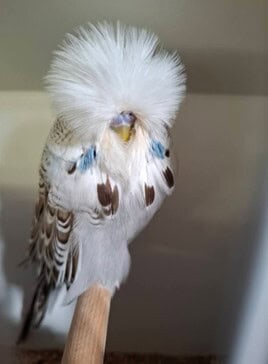 Multiple Best In Show Winner including Best Any Age at BS Centenary Club Show
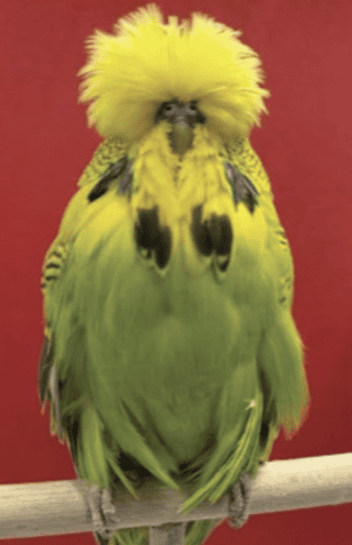 Best Young Bird & Best In Show Winner at BS Centenary Club Show (Photo Courtesy of Budgerigar Society UK)
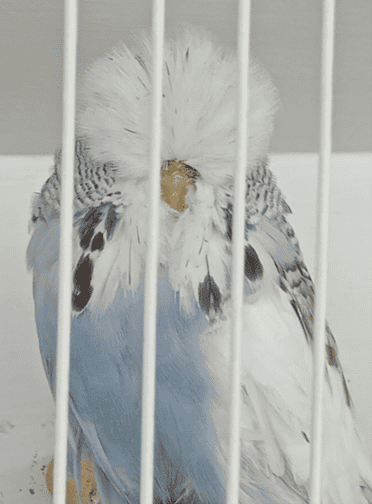 2025 Rung Dominant Pied Hen
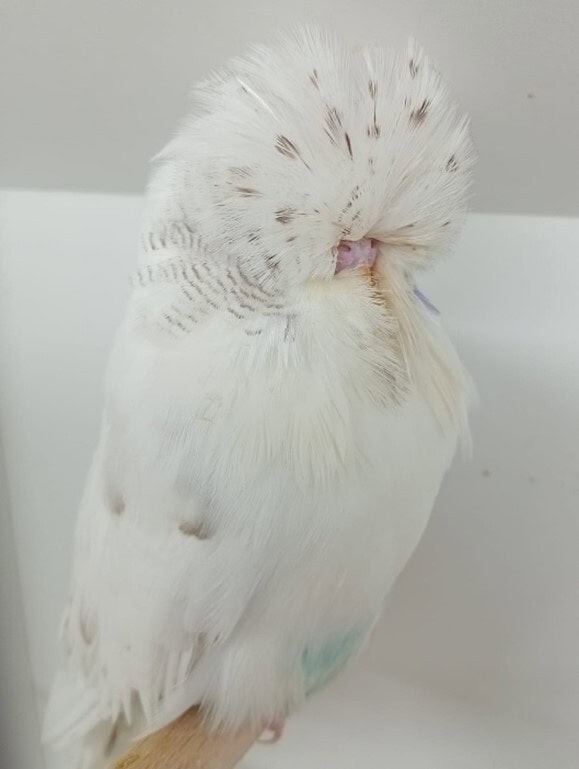 Recessive Pied Cock
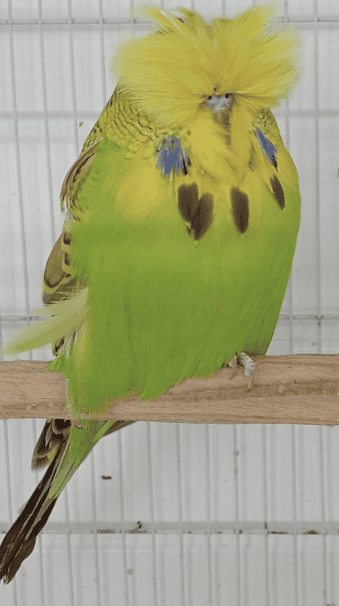
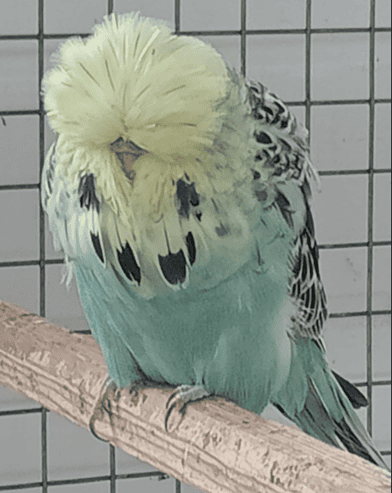 Best Opp Sex Award Winning Yellow Faced Hen
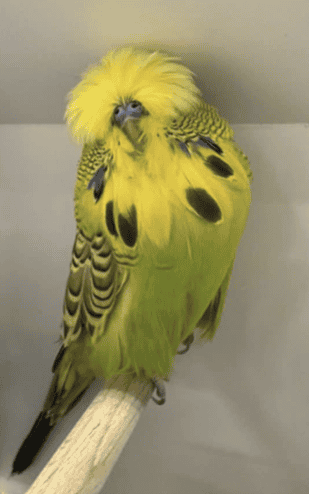 2 x Best In Show Winner Cinnamonwing Dark Green Cock
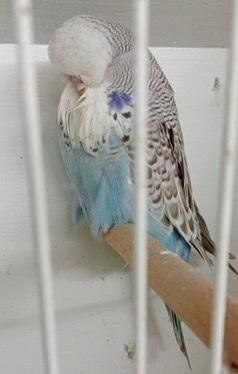 Nest Feather – Style
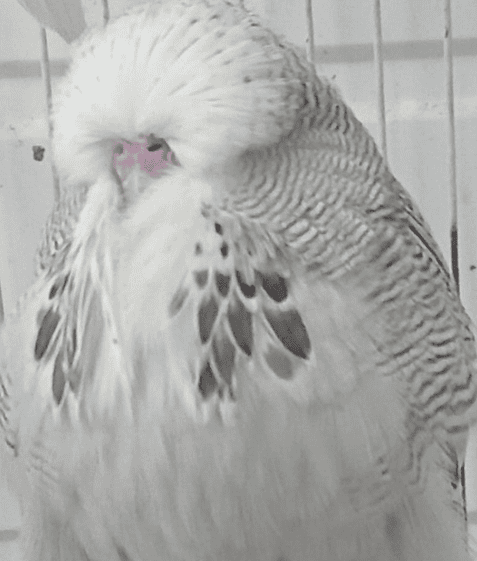 Nest Feather – Shoulder
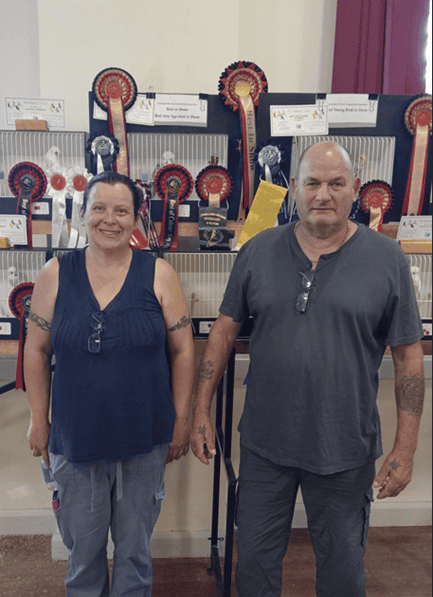 Gina & Alan Adams at BS Centenary Club Show
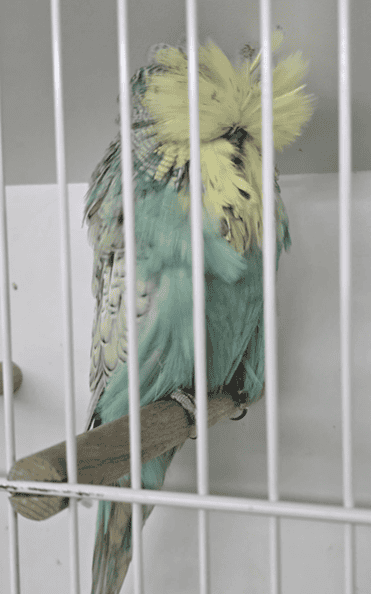 Spangle Yellow Faced Cock, photo courtesy of Beau Schutz
 A second photo of the winning Cinnamon Light Green Cock from the 2025 Centenary Show
Incl. Best Young Bird and Best in Show