Australian National Budgerigar Council


Macrorhabdus
Macrorhabdus in Budgerigars
What Breeders Need to Know
Macrorhabdus ornithogaster, often historically called “avian gastric yeast” or “megabacteria”, is one of the most significant gastrointestinal pathogens affecting budgerigars in Australia.
It is a yeast that colonises the narrow junction between the proventriculus and ventriculus, known as the isthmus. While many birds carry it without issue, others develop severe, sometimes fatal disease characterised by weight loss, malabsorption, melaena, and chronic ill-thrift despite a good appetite.
What Causes Macrorhabdus Infection?
The cause is infection with the yeast Macrorhabdus ornithogaster itself. Transmission is primarily faecal–oral, with birds ingesting the organism from contaminated food, water, or surfaces. Infected birds, especially asymptomatic carriers, act as the main reservoir of infection.
A key challenge is that infection does not equal disease. Many birds remain clinically normal, and the triggers that cause progression to disease are not fully understood.
Stressors such as poor nutrition, environmental changes, breeding stress, or other illnesses are thought to play a role in tipping birds into clinical disease.
How Is It Diagnosed?
Diagnosis can be achieved both in the live bird and post-mortem.
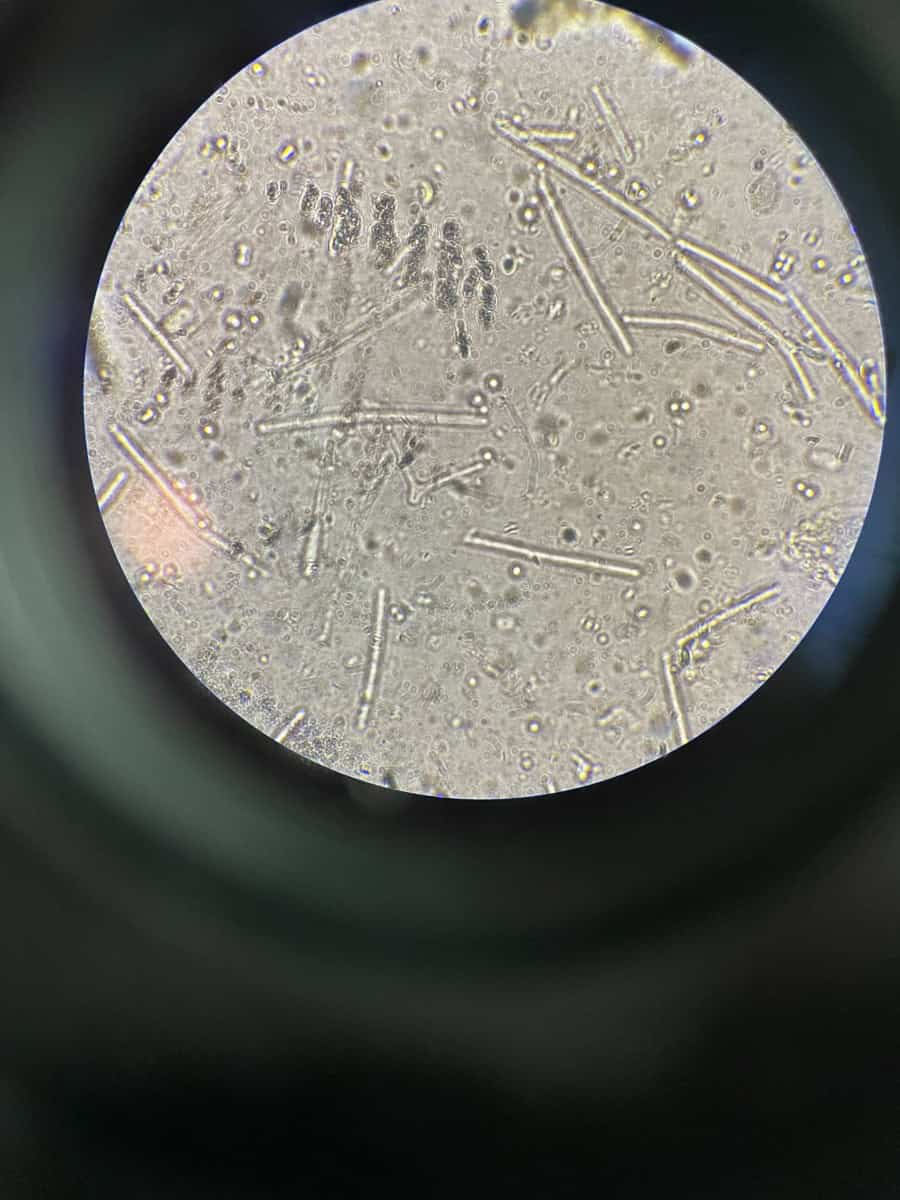
Faecal microscopy remains the most practical first-line test. The faecal suspension technique is the most sensitive in-clinic method for detecting organisms in droppings.
Direct isthmus cytology from the proventricular–ventricular junction is one of the most sensitive diagnostic tests overall and can rival PCR in accuracy.
PCR testing can be used on faeces or tissue, but has limitations in cost, turnaround time, and DNA extraction reliability.
Histopathology confirms disease and allows assessment of tissue damage.
Importantly, shedding can be intermittent, so repeated testing is often required.
Can It Be Prevented?
Complete prevention is difficult because the organism is now widespread and likely endemic in Australian budgerigar populations and even wild birds.
However, risk can be reduced by:
- Strict quarantine and testing of new birds;
- Maintaining excellent aviary hygiene;
- Minimising faecal contamination of food and water;
- Reducing stressors such as poor nutrition, overcrowding and environmental instability; and
- Avoiding mixing birds of unknown health status.
Given the high prevalence of asymptomatic carriers, eradication from established aviaries is challenging.
Can It Be Controlled or Eliminated?
Control is possible, but complete elimination is difficult and often impractical.
Many aviaries adopt a management approach, accepting low-level infection if birds remain clinically well. Attempts at eradication require strict biosecurity, testing, and often aggressive treatment protocols, which are labour-intensive and not always successful.
Reinfection from carriers or the environment is common.
From a practical standpoint, many breeders aim to control disease rather than eliminate infection entirely.
What Treatment Should Be Used?
The traditional treatment of choice is amphotericin B, administered either orally or in drinking water. However, treatment success is inconsistent, with significant failure rates reported even at high doses and prolonged courses.
In-water treatment is often less effective due to variable intake, and recrudescence or continued shedding after treatment is common.
Benzoate compounds such as sodium or potassium benzoate show promise but carry toxicity risks and require careful use.
Overall, treatment protocols still require optimisation, and current failures are thought to relate more to drug delivery and protocol limitations than true resistance alone.
Why We Should Stop Calling It “AGY”
The term “avian gastric yeast” is outdated and misleading. Birds host a wide range of yeast species in their gastrointestinal tract, many of which are normal or incidental inhabitants.
Macrorhabdus ornithogaster is a specific organism with unique biology, pathogenicity and clinical significance. Grouping it under the broad label “avian gastric yeast” incorrectly implies that it is just one of many interchangeable yeasts, which can lead to confusion in diagnosis, treatment and communication.
Similarly, the older term “megabacteria” is incorrect, as this organism is a fungus, not a bacterium.
For clarity and accuracy, we should move toward using Macrorhabdus ornithogaster, or simply Macrorhabdus or MO. This aligns terminology with current scientific understanding and helps ensure breeders and veterinarians are discussing the same disease entity.
Take-Home Message
Macrorhabdus ornithogaster remains a common, complex and often frustrating condition in budgerigar aviaries.
While infection is widespread, disease is variable and influenced by multiple factors. Accurate diagnosis, realistic expectations around control, and evolving treatment strategies are key to managing its impact in modern aviculture.