Australian National Budgerigar Council


Colours Standards Report Sept 2026
Colours & Standards – Matters for Consideration
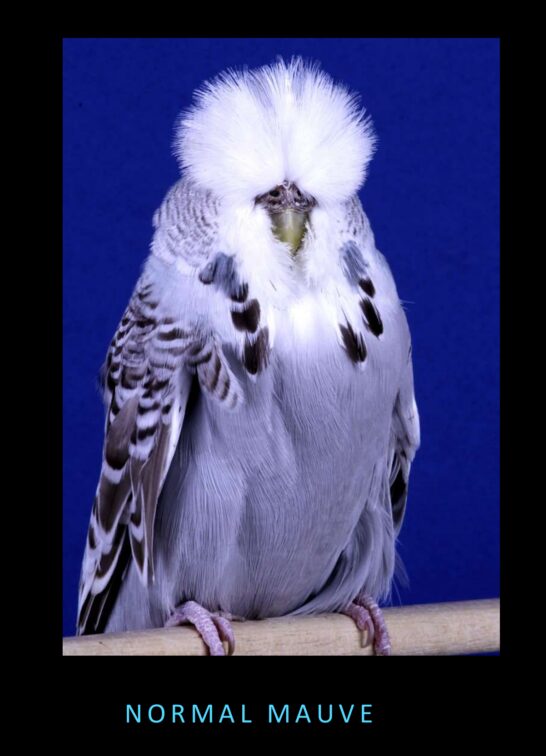
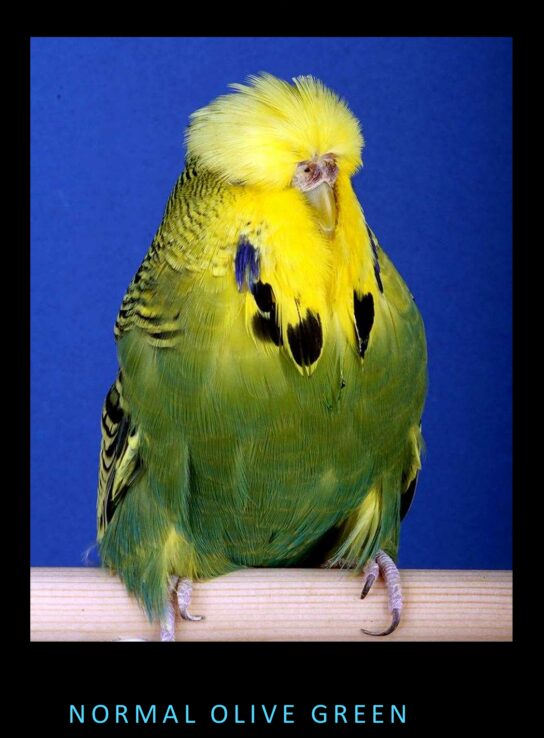
BSNSW Motion – Normal Olive and Normal Mauve National Class
The BSNSW has proposed the creation of a new National Championship class for Normal Olives and Normal Mauves. The stated objective is to encourage the breeding and exhibition of these colours, which are recognised within the Australian Standard but are now rarely seen at National level.
There is merit in the underlying intent of the motion. Olive and Mauve are the double-dark-factor forms of the Green and Blue series respectively, and maintaining these colours within studs can have value beyond simply producing an Olive or Mauve exhibition bird. There is value in breeding “hotter” coloured Lutinos, as well as in body contrast for Clearwings. Creating a National class would provide breeders with a clear incentive to retain, improve and exhibit these double dark factor birds, rather than continually breeding toward the colours most likely to be competitive in the existing Normal classes.
From a Colours & Standards, the Australian Standard already recognises Dark Green, Olive, Cobalt and Mauve as standard colours, so there would be no requirement to develop a new colour standard before such a class could operate. Historically, specialist colour classes also encouraged fanciers to concentrate on individual colours, and there is evidence that Olives in particular were once shown in considerably greater numbers than they are today.
A dedicated National class could therefore:
- encourage breeders to deliberately maintain Olive and Mauve;
- provide greater recognition for two colours that are presently seldom represented at the Nationals;
- maintain greater genetic and colour diversity within the exhibition budgerigar;
- provide another avenue for specialist colour breeders to compete nationally; and
- potentially improve the exhibition quality of Olive and Mauve birds over time.
There are, however, several matters that warrant consideration before adding another permanent National class.
The first is whether lack of a separate class is actually the principal reason these colours are uncommon. Creating a National class does not automatically create depth or quality. If only a relatively small number of breeders nationally are producing quality Olives and Mauves, the initial result may simply be another class with limited competition.
There is also the broader question of class proliferation. The National Championship currently contains 29 classes. Once a separate class is created because a recognised colour is disadvantaged within a broader class, a reasonable argument could subsequently be made for other colours or varieties to receive similar treatment. Colours & Standards therefore needs to consider what threshold should justify the creation of a permanent National class.
Identification is another practical consideration. South Australian discussion of the motion highlighted the potential difficulty of distinguishing an Olive from a Violet Dark Green, particularly under differing lighting conditions. If a National Championship is going to create a class specifically on the basis of colour, judges and selection committees must be confident that birds can be consistently and accurately classified.
I would also be careful about describing the proposed class simply as a “Dark Factor class”. Dark Green and Cobalt are also dark-factor birds, carrying one dark factor, whereas Olive and Mauve carry two. The BSNSW motion specifically proposes Normal Olives and Normal Mauves. If adopted, the nomenclature and purpose should make clear that this is effectively a double-dark-factor Normal class, rather than a class encompassing all Dark Factor birds.
One alternative worth considering would be a trial or exhibition class for Normal Olive and Mauve before permanently expanding the National schedule. This could provide actual evidence of entry numbers, quality, breeder interest and identification issues over perhaps two or three years. If the class attracts strong representation and demonstrably stimulates these colours, there would then be a stronger case for permanent inclusion.
On balance, I support the objective of preserving and promoting Olive and Mauve budgerigars. The question for the broader hobby is whether creation of a permanent National class is the best mechanism to achieve that objective, or whether a trial class would allow the ANBC to test the proposition before making a permanent structural change.
South Australian Proposal – “Cinnamonwing” to “Cinnamon”
South Australia has proposed that the Australian nomenclature for the variety currently known as Cinnamonwing be changed to simply Cinnamon. The principal argument is international consistency.
The World Budgerigar Organisation uses “Cinnamon” throughout its Colour Standards, including Cinnamon Light Green, Cinnamon Dark Green, Cinnamon Olive, Cinnamon Skyblue, Cinnamon Cobalt and Cinnamon Mauve. The UK Budgerigar Society similarly uses Cinnamon rather than Cinnamonwing.
There are several arguments in favour of the change.
Firstly, Australian exhibitors and judges are increasingly interacting internationally. Using internationally recognised terminology makes Australian standards, articles, pedigrees and judging material easier to understand outside Australia.
Secondly, “Cinnamon” arguably describes the genetic variety more accurately than “Cinnamonwing”. The Cinnamon factor does not simply alter the wings. It changes the normally black melanin markings to cinnamon brown and affects the visual appearance of the bird more broadly. The Australian Standard itself describes the effect of Cinnamon as suppressing black melanin and producing brown markings rather than merely altering the wing.
Thirdly, the change would make terminology for combinations somewhat cleaner. Terms such as Opaline Cinnamon, Spangle Cinnamon and Dominant Pied Cinnamon align naturally with the terminology encountered internationally.
There is also already some inconsistency within Australian material. While the ANBC National class remains “Cinnamonwing”, the current Standard contains references such as the “Cinnamon form” when describing certain combinations. Moving to one nationally consistent term could remove that inconsistency.
The strongest argument against the proposal is tradition and familiarity.
“Cinnamonwing” has been used in Australia for many decades and forms part of our own budgerigar history. The first Australian Cinnamonwings were recorded in Adelaide in approximately 1933, and generations of Australian breeders have known the variety by that name. It appears throughout National results, pedigrees, show schedules, judging examinations, club records, publications and trophies.
Changing the terminology would therefore require more than simply changing the title of National Class 15. The ANBC Standard, class schedules, judging documentation, variety matrices, educational material and electronic systems would all need to be reviewed to ensure “Cinnamonwing” was replaced consistently where appropriate.
There would undoubtedly also be a transition period where breeders continued to use both terms. However, that is largely an administrative and educational issue rather than a Colours & Standards problem, and could be managed by initially referring to the variety as “Cinnamon (formerly Cinnamonwing)”.
Importantly, the proposed change does not alter the variety, its genetics, the required colour, its markings or how it should be judged. It is a nomenclature change only.
For that reason, I believe the question comes down to whether Australia wishes to retain distinctive historical terminology or increasingly align its Standard with international convention.
From a Colours & Standards perspective, I see merit in South Australia’s proposal. “Cinnamon” is already widely recognised internationally, accurately identifies the variety rather than implying that its effect is confined to the wing, and would improve consistency between the Australian and International fancy. Provided the change is accompanied by an appropriate transition period and a comprehensive update of ANBC documentation, there appears to be little technical disadvantage to adopting the internationally recognised terminology.
Peter Thurn
Colours & Standards Coordinator