Australian National Budgerigar Council


Yellows The Lost Mutation
Budgerigar Varieties | History & Opinion
Yellows — The Lost Mutation
By Ron Hunt
Once a familiar sight on the exhibition bench, Yellow budgerigars occupied a distinctive place in Australian show schedules. Ron Hunt reflects on the varieties, breeders and competitions of earlier decades and questions whether some of these once-celebrated birds have been overlooked in the modern Fancy.

Remembering the Yellow Mutation
I recently rediscovered an article by Cyril Rogers about the yellow mutation and what can be produced by birds carrying the yellow gene. Cyril’s article was written in 2000, but I believe he was recalling birds that appeared on the show bench during the 1950s and 1960s.
Reading it certainly took my mind back to those days, when yellow was treated in much the same way as green and blue. I can recall an old-timer of that period who bred nothing but yellows and tried to win all four yellow classes on the show bench: Old Cock, Old Hen, Young Cock and Young Hen.
His name was Phil Benson, and as far as he was concerned, winning all these categories proved he was a Champion breeder. These days, I am inclined to agree with him. Many exhibitors win with different varieties across several classes but may have only one good bird of a particular variety. Breeding a consistently high standard across all four classes is a different challenge altogether.
“Breeding a consistently high standard across all four classes is a different challenge altogether.”
– Ron Hunt
Understanding Mutations and the Standard
One of the problems today is that some breeders do not fully understand what constitutes a mutation. I draw attention to the classification of Dilutes, a class that, in my opinion, should never appear in a show schedule, as it represents a failure to breed birds to the required Standard.
A classic example is the Cinnamon Yellow, now classified as a Darkwing. What a shame! In accordance with genetics, Cinnamon Yellows should have the same recognition as Cinnamon Greens and Cinnamon Blues. I believe this would also help distinguish these birds from the more common budgerigars found in pet shops.
When Yellows Had Their Own Classes
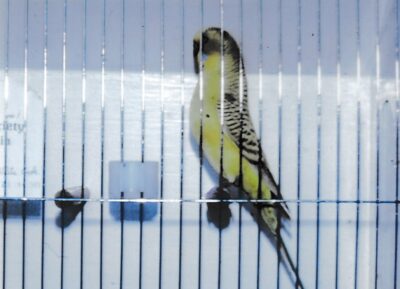
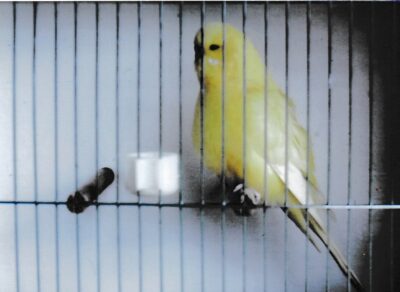
I can remember when show schedules included classes for Light Yellow, Dark Yellow and Olive Yellow. I admit that Dark Yellow was not as popular as Light Yellow or Olive Yellow, but the class could still attract four to six entries. Light Yellow (non-black-eyed yellow) would often attract more than ten entries, while Olive Yellow could have eight or more.
Yellow Varieties on the Show Bench – A Look Back
Ron recalls the following classes and typical entry numbers from earlier decades:
- Light Yellow: Often more than 10 entries.
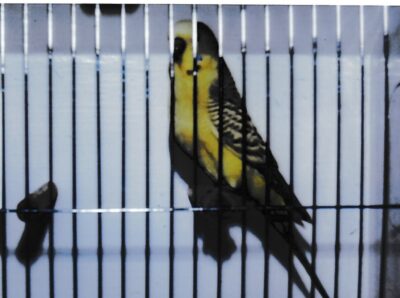
- Dark Yellow: Generally 4–6 entries.
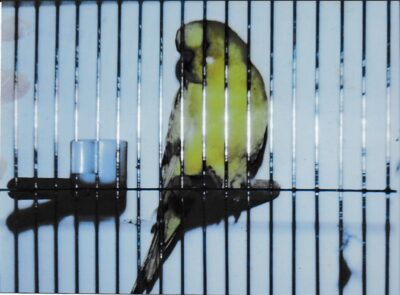
- Olive Yellow: Frequently 8 or more entries.
- Cinnamon Yellow: A striking combination of cinnamon markings and yellow ground colour.
The Challenge of Breeding Olive Yellows
Starting with Black-Eyed Yellows, I found it easy to breed Dark Yellows. The next step, breeding Olive Yellows, sounds simple enough, but it was a variety I was never able to produce to my satisfaction. Cinnamon Yellows, on the other hand, were easy to breed, and the cinnamon markings against the yellow ground colour made for a very striking bird.
Should Cinnamon Yellows Receive Greater Recognition?
I cannot understand why the ANBC calls these birds “Darkwings” and groups them with other varieties that, in my view, are really the result of breeding accidents. I would like to see the ANBC give greater recognition and support to true varieties and their place in our hobby.
The Practical Challenges Facing Breeders
We must also remember that not all breeders can dispose of their culls through auctions or pet shops. In my area, pet owners have shown a preference for bright-coloured birds rather than the show birds that breeders might otherwise offer them. This creates another challenge for those trying to maintain quality in their breeding programs.
Learning from the Past to Protect the Future
Those who responded to my survey have told me that very few people read material online. Perhaps my thoughts and ideas will fall on deaf ears, but I encourage readers to seek out Cyril Rogers’ article from a bygone era and consider what it has to teach us.
If we want to bring budgerigars back to greater popularity, perhaps we need to look back at what we once valued, recognise the varieties we have lost sight of, and consider what we can do to preserve and promote them for the future.
“Perhaps we need to look back at what we once valued, recognise the varieties we have lost sight of, and consider what we can do to preserve and promote them for the future.”
– Ron Hunt
Ron Hunt
Preserving Our Budgerigar History
The history of exhibition budgerigars is rich with varieties, breeders and experiences that have helped shape the Fancy we know today. Reflecting on earlier breeding achievements and show schedules provides an opportunity to consider how our varieties have developed and how their unique characteristics might be preserved for future generations.
Editor’s note: The views and opinions expressed in this article are those of the author, Ron Hunt, and do not necessarily reflect the official position of the Australian National Budgerigar Council. References to variety classifications reflect the author’s personal views.
Breeding Good Coloured Olive Yellows
By Cyril Rogers 1984 (reproduced with permission from Terry Tuxford)
Whilst visiting a friend’s aviaries I saw amongst their many coloured budgerigars in residence several olive yellows carrying that beautiful soft orange yellow shade which reminded me how scarce these attractive birds have become. Although a sprinkling of the various olive forms are mostly to be found in mixed colony breeding aviaries very few specimens seem to find their way on to our show benches nowadays. There seems to be two main reasons for the decline in popularity of all the olive coloured varieties, one being the ease in which the somewhat similar grey green coloured forms can be produced and the second is the difficulty in getting substance in these dark coloured kinds. Olive yellows and the two associated varieties, the greywing olive greens and the yellow wing olive greens are extremely interesting birds to breed, improve and exhibit and offer great scope to breeders who like an all round challenge.
Before I proceed to give some suggestions for breeding good coloured olive yellows I feel I must explain just how they reproduce and their hereditary characters. They belong to the recessive dilute green (yellow) family and their attractive rich colour is due to the fact that they have a double quantity of the darkening character ‘D’ in their genetic make-up. Olive yellows are in fact light yellows to which a full quantity of the dark character has been added and this can change the light yellow colour into a rich orange shade. It should be noted that the dominant dark character is not a colour in its own right but a character that in conjunction with another colour alters the depth and shade of that colour. The dark character can be had in either a single quantity which gives the dark colours, i.e. the dark greens and the cobalts or a double quantity producing the olive greens and the mauves.
Two Grades of Yellow
Now for a more detailed description of the colouring of olive yellows so that breeders can recognise specimens when seen. The Budgerigar Society’s Colour Standards gives two grades of yellows – the clear and the suffused.
From the descriptions it will be seen how the grey yellows can, and often are, mistaken for the more rare olive yellows. Like all yellows the olive yellows can be had in the clear and the suffused kinds. In overall colouring the olive yellows are much deeper and decidedly richer in colour than the light yellows (buttercups) with the body colour a warm orange yellow and the rump a golden olive tinted shade. With the suffused kind the body shade is more of a golden olive tone with the rump showing a much deeper colour and the tail more heavily tinted. The grey yellows are much more of a dull mustard colour and quite distinct from the lovely warm shade of the olive yellows.
Olive yellows inheritance is quite straightforward when only yellow series birds are being used and follows the general Mendelian rules of inheritance. There are of course a great many mating of other colours that will give varying percentages of olive yellows when the parent birds possess the necessary colour characters needed. The following rules will show the manner in which olive yellows pass on their colouring.
- Pure olive yellow mated to pure olive yellow will give all olive yellow young.
- Pure olive yellow mated to pure light yellow will give all dark yellow young.
- Pure olive yellow mated to pure dark yellow will give half olive yellow and half dark yellow young.
- Pure dark yellow mated to pure dark yellow will give a quarter light yellow, half dark yellow and a quarter olive yellow.
The word ‘pure’ here indicates that the birds are not carrying any other colour characters in their genetic make-up.
Other Varieties From Splits
If the parent birds used happen to be split for other colour characters then varieties of yellow birds can arise such as cinnamon or opaline light, dark or olive yellows. There is no visual way in which pure birds can be distinguished from those, which are carrying other colour characters. In a controlled breeding stud any hidden colours are invariably revealed in the course of time. The most frequent colour carried by yellow series birds is white and in the case of olive yellows results in the appearance of white mauves. Although white mauves can be used in the breeding of olive yellows their use will only cause an increased number of them to be produced resulting in fewer olive yellows.
I am sometimes asked how a start can be made when the would-be breeders do not possess any examples of the olive yellow in their studs. Let me say right away that it is not easy and requires considerable perseverance and patience to produce a nucleus of the desired coloured birds. One way to start is to obtain a pair or so of genuine dark yellows, which seem to appear quite regularly amongst the young of normal pairs when one partner has a single dark character and both are split for dilute. The expectation of pairing together two pure dark yellows is 50% dark yellows, 25% olive yellows with the remaining 25% being light yellows which are not required in this exercise.
Such matings will give the breeder an average of one olive yellow in four during the first season and in the following year these birds can be paired to dark yellows again giving some 50% of the desired coloured birds. Their numbers can be further increased by mating together some of the surplus dark yellows as in the first season. In the third year a series of olive yellow matings can be made with a certain amount of selection for obtaining the near clear deep orange body shade. It is very important that from this period a selection of the best coloured stock is made every year. If during the pairings the cinnamon character is incorporated via either cinnamon light yellows or cinnamon dark yellows it only takes a season or two before the very pleasing cinnamon olive yellows can be produced.
Good Overall Colouring
The few results I have seen coming from the crossing of olive yellows with yellow wing olive greens or yellow wing dark greens were very good for overall colouring. Some of these birds had an exceptional depth of body colour together with quite good clear wings giving a most attractive appearance. Most of these birds were very tight feathered which gave them a rather less substantial look but I feel this could be corrected by the choice of suitable breeding partners.
With all the varieties that carry a double quantity of the ‘D’ character in their genetic make-up it is found that they are more difficult to improve in substance than those where the ‘D’ is absent. It would seem that the only sure way to achieve this is to periodically mate double dark to single dark with the single dark being bred from a single dark and a non-dark (light yellow, light green, sky blue etc).
Full body coloured greywings, a composite form very few present day budgerigar fanciers have yet to see. These delightfully coloured birds are a combination of the greywing and clearwing characters in one bird, they have the greywing undulations of the greywing set off by the deep brilliant body colour of the clearwing. In the heyday of the greywings and the introduction from Australia of the clearwings (which included some full body coloured greywings), only a very limited number of full body coloured greywings were bred in this country and very few of these found their way on to the show benches. As far as I know it is a very long time since an example has been shown in this country although an odd specimen or two have been bred in mixed coloured aviaries.
At times heavily wing marked clearwings have been wrongly called full body coloured greywings and although such birds have several features of the full body coloured greywings they are not the real composite birds. By test pairing it is quite easy to discover which are the genuine birds and which are poorly coloured clearwings. When a full body coloured greywing is paired to a dilute (yellow or white) half the young will be greywing/dilutes and half clearwing/dilutes. On the other hand when a poorly coloured clearwing is paired to a dilute all the young will be clearwings or if the clearwing parent is split for dilute then half will be clearwings and half dilutes. It should be noted that a clearwing cannot be split for greywing or vice versa and that a full body coloured greywing cannot be split for dilute.
OLIVE YELLOW BUDGERIGARS
by Cyril Rogers
It is now many years since examples of Olive Yellows have been seen on our show benches. Nevertheless, a few specimens are bred each year, generally in mixed collections. Good coloured Olive Yellows are very handsome birds, with their deep, rich, golden olive body colouring and are a variety well worth the attention of colour breeders. The reason for their loss of popularity some years ago, was the emergence of the grey yellow which is somewhat similar in colouring, although much duller and greyish green in shade and are far easier to produce. Having a double quantity of the dark character in their genetical make-up, they invariably lack size and as there is a prevailing demand for large birds these days, Olive Yellows only now appear occasionally and as I remarked before, usually in mixed, uncontrolled aviaries.
I think that breeders will realise there are many matings which can give varying percentages of Olive Greens and Olive Yellows, but of course, the desire to make the best use of materials on hand is paramount. The primary object of the matings we are about to discuss, is the production of Olive Yellow birds. Breeders know that by pairing 2 birds, each having a single dark character in their genetical make-up, they can produce 25% of birds having a double, dark character. It is this double dark character that is so essential in Olive Yellow breeding. If fanciers look round amongst their stocks I feel sure they will find many birds having the dark yellow character, both in the pure and split forms. In the production of Olive Yellows, it is best to have, if at all possible, pure dark yellow birds as stock, as it is the colours when mixed that make the resulting Olive Yellows a peculiar shade of colouring.
By mating 2 dark yellows together, the theoretical expectation is; 25% Light Yellows, 25% Olive Yellows and 50% Dark Yellows. I feel that I must point out here that a Dark Yellow budgerigar is not necessarily heavily suffused with green and some of them can be quite a nice rich yellow shade. At the same time, a heavily green suffused light yellow is not a Dark Yellow, although in some cases, they may look somewhat alike. It will have been seen that Olive Yellows can be produced in the very first generation by mating together 2 genuine Dark Yellow birds and the Dark Yellows produced from these matings can also be used in the following years for the production of further Olive Yellows. This can be achieved by pairing an Olive Yellow to a Dark Yellow. 50% of each colour can be expected from the crossing.
It is possible to find amongst various stocks, fine and well made Dark Yellows and if these are used to mate amongst themselves or to normal Normals split for Yellow, some excellent Olive Yellows can be expected. Strangely enough however, the majority of Olive Yellows are a little less in substance than the Dark Yellows that have produced them. This fact appears to be the same with nearly all the double quantity dark character birds. It is particularly noticeable amongst Olive Greens and Mauves.
Once the breeder has produced a few Olive Yellows, a certain amount of selection can then be carried out to produce birds of a fine quality, more substance and of a purer and richer colouring throughout. It is possible, by very careful selection of the parent birds over a number of seasons, to produce Olive Yellows that are of a very deep, rich, orange olive shade; a very attractive and handsome bird indeed. In addition, if the cinnamon character is added to the Dark Yellows and Olive Yellows, there is further scope for the production of a soft, rich yellow, both in the dark and olive forms.
I certainly hope that breeders will, during the course of this coming season, be successful in getting a few Olive Yellow specimens when they pair their Dark Yellows together and that in the course of time, they will be finding their way to the show benches. Here other breeders can have a look at just what can be expected from the Dark Yellow kinds.