Australian National Budgerigar Council


Compare The Standard
COMPARE THE STANDARD
By Ron Hunt
Over the years—and I go back to 1956—I can recall exhibitors claiming that their birds had “passed The Standard“. Being a newcomer in the 1950s, I did not question these opinions, but I never saw a bird that was above The Standard.
I must raise the point that judging is by comparison; that is, we compare each exhibit against The Standard. I feel some exhibitors have forgotten The Standard and only use their own opinion.
I have taken the liberty of reproducing some photographs of birds that were part of the NSW Team that competed at the 2025 National. I hasten to say that I thought the Normal varieties in this team were of a good standard, so any comments I make are intended to be constructive and not criticisms.
Talking to some of today’s judges, I feel they frighten the birds at the start and make it hard for themselves. Also, those who rely solely on the outline do not have the same comprehension as those who have a copy of the printed Standard to look at and gauge the quality of the exhibit.
I have included photographs of the NSW Team and remind readers that the camera does not always give a true picture, so my comments are based solely on what we see.
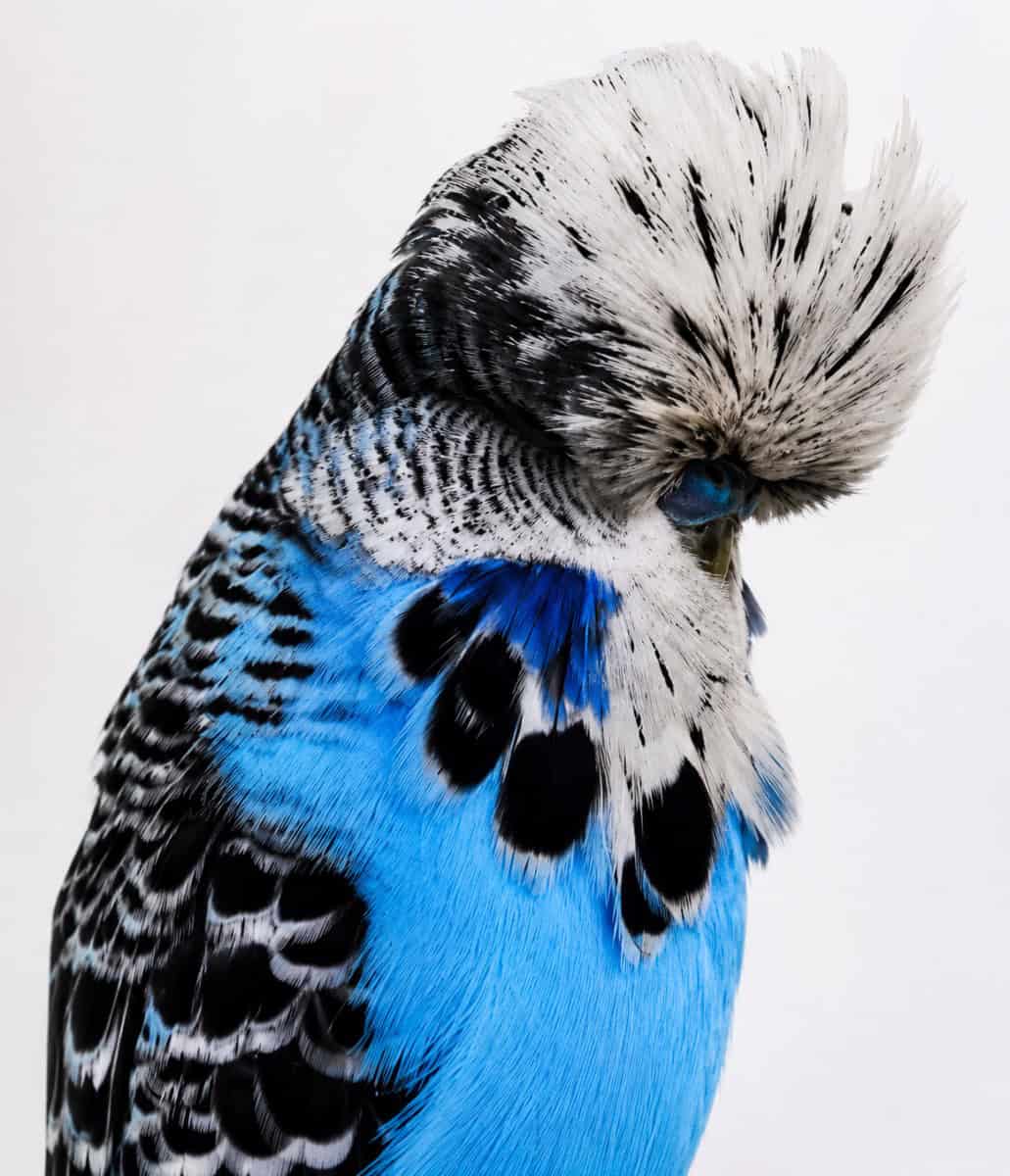
Photo A – Normal Blue Class
Love the frontal rise and the head shape. A shame about the flecking. The spots are hanging off the mask, not on it, and the wing pattern is non-existent.
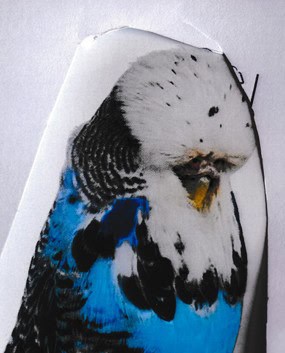
Photo B – Hens Class
Excellent body colour. The head appears to be too small for the body. The spots on the mask are nothing like The Standard. Wing pattern does not exist.
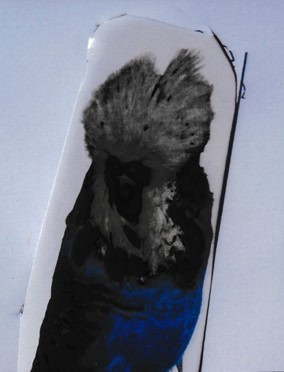
Photo C – Violet Class
Once again, very good colour and plenty of top skull. However, the face is pinched, giving the beak too large an appearance. The spots are again only hanging on the edge, not well shaped and of all shapes and sizes. Body curves are not evident in the photograph, giving the bird the shape of a telegraph pole.
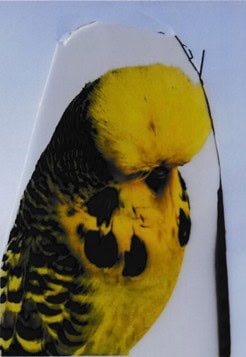
Photo D – Normal Grey Green
Really good shape to the head and very clear of flecking. The spots are a little misshaped but are well spaced, although hanging off the mask. The bird does look like a winner.
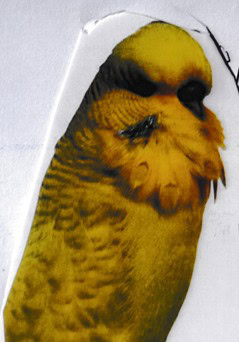
Photo E – Black Eyed Self Colour
One Standard that has been the victim of alterations, trying to match the exhibitors’ birds instead of the exhibitor trying to match The Standard.
This bird should be wrong classed—far too green for a Yellow. The markings are more akin to a Greywing. I will not comment on the mask, although I ask whether people are colour blind.
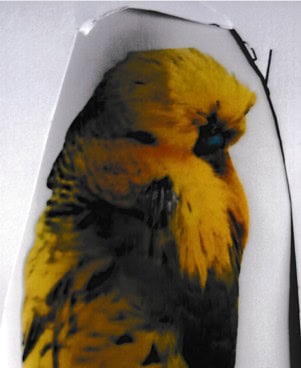
Photo F – Spangle
Another tragedy of mismanagement. When they first appeared on the show bench, they created a rush of breeders wanting them.
This bird is a very poor example. There are no spots (which should be circular), and the wing pattern is nothing like The Standard.
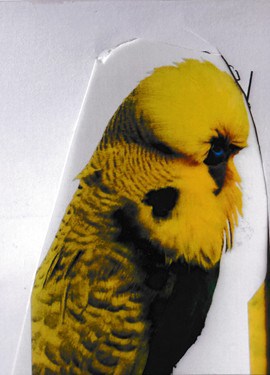
Photo G – Clearwing
As Ken Gray, an old-timer from the UK, once said to me, “You want to see Greywings in the UK, as they show them as Clearwings.”
The same can apply to Australia, and it is the reason why breeders of Clearwings do not put their birds in shows. They believe the judges cannot read and cannot tell the difference between Greywings and Clearwings.
To me, this is a sad state of affairs, particularly as we are seeing declining entry numbers at shows and are not gaining members in parallel with population growth. Maybe we need some adjustments to our thinking.
I like to look at my club, Macarthur, and feel proud that after 56 years it is still in existence, but I worry that it will go the way of others without changes to our ideas.
Ron Hunt
— Said Without Prejudice
P.S. The Standard referred to in this article was downloaded from the ANBC website in 2025.