Australian National Budgerigar Council


Fenugreek Seed
ANBC | Budgerigar Nutrition & Breeding
Celtic Magic Plant: Tasty in the Kitchen, but Also for Our Birds?
An In-Depth Look at Fenugreek Seeds and Their Potential as Sprouted Seed for Budgerigars
Article and photographs credited to Peter van Amelsvoort
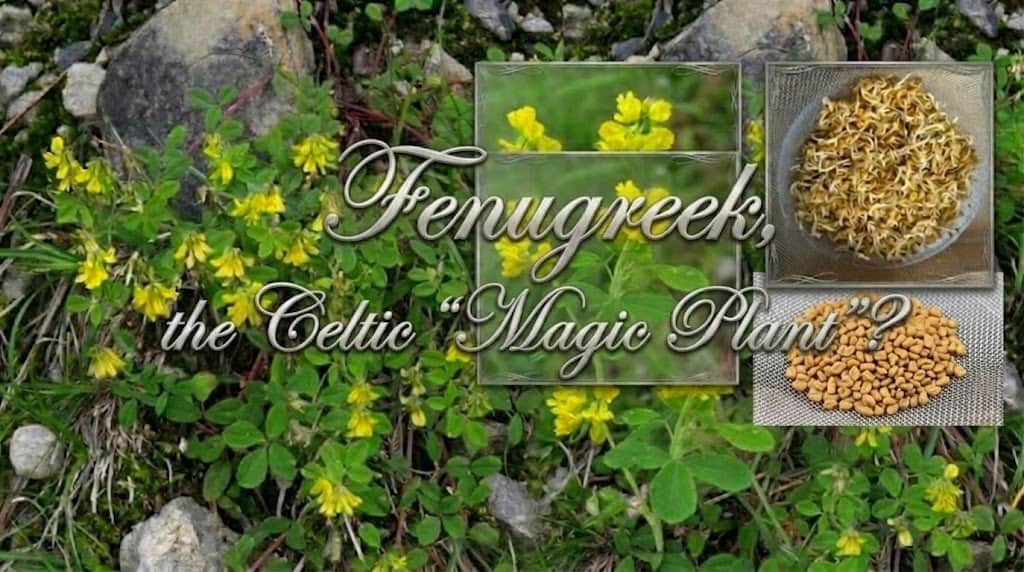
Could a plant used for thousands of years in cooking and traditional herbal medicine also have a place in the budgerigar breeding room? Fenugreek (Trigonella foenum-graecum) has attracted interest for its nutritional composition and the way its seeds change during germination.
Long associated with the Celts, Egyptians and Romans, this distinctive herb is familiar in kitchens around the world. But what does it offer our budgerigars, and why might the sprouted form be more practical than the dry seed?
This article explores fenugreek’s origins, nutritional characteristics, preparation, potential applications and the important limitations of the available research.
Fenugreek at a Glance
- Botanical name: Trigonella foenum-graecum
- Plant family: Fabaceae (legumes)
- Traditional uses: Food, animal fodder and herbal preparations
- Seeds: Small, angular, firm and yellow-brown
- Potential use for budgerigars: A small part of a varied sprouted-seed mixture
- Important consideration: Benefits specific to budgerigars have not been firmly established
What Is Fenugreek and Where Does It Originate?
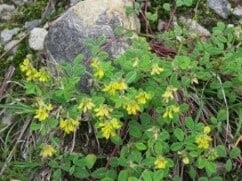
Fenugreek is an annual plant belonging to the legume family, making it a relative of peas, beans and lentils. Its Latin name, Trigonella foenum-graecum, translates approximately to “three-angled Greek hay”, reflecting the plant’s form and its traditional use as fodder.
The plant originates from the Mediterranean region, the Near East and parts of South Asia, including India, which remains a major producer.
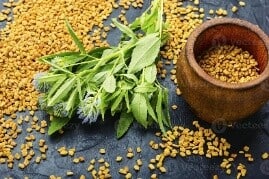
Fenugreek seeds are small, angular and light brown to yellowish-brown. They have a distinctive, spicy aroma often compared with curry, cumin or maple syrup.
The Nutritional Properties of Fenugreek
Fenugreek seeds are valued in traditional phytotherapy, or the use of plants and plant-derived preparations, because they contain several nutritionally interesting compounds.
The seeds can contain approximately 25–30% protein, together with soluble fibres such as galactomannans, mucilages, saponins, antioxidants and various minerals. Iron, copper, calcium, magnesium and B vitamins are among the nutrients discussed in the source material.
Some of these compounds have been investigated for their effects on digestion and metabolism. Galactomannans, for example, are soluble dietary fibres, while mucilages are gel-forming plant substances.
Studies involving poultry and other species have prompted interest in whether fenugreek could influence feed intake, intestinal health and nutrient utilisation. However, results from other birds or laboratory studies should not automatically be treated as established benefits for budgerigars.
Why Is Fenugreek Rarely Included in Standard Budgerigar Seed Mixes?
Dry fenugreek seed is uncommon in ordinary commercial budgerigar seed mixtures, although it can sometimes be found in specialist herbal or sprouting mixes.
The original article identifies several possible reasons:
- Hardness: Dry fenugreek is very hard and angular, making it less convenient for a small seed-husking bird to handle.
- Cost: Fenugreek may cost more than commonly used millets and other basic seeds.
- Uncertainty about reproductive effects: Fenugreek contains plant compounds that have attracted interest for possible hormonal effects, but claims that normal feeding stimulates breeding, causes aggression or contributes to egg binding in budgerigars have not been demonstrated.
For these reasons, it is more useful to consider fenugreek as a possible supplementary ingredient than as a substitute for an established, balanced diet.
Picky Eaters: Is It Taste or Mechanics?
When budgerigars leave unfamiliar seeds in the bowl, breeders often assume the birds dislike the taste. However, seed preference can involve several factors beyond flavour.
Why Might Birds Reject Dry Fenugreek?
- Beak mechanics: Budgerigars are specialised seed-huskers, and very hard seeds can be difficult or inefficient to crack and handle.
- Texture and shape: Birds use sensitive beaks and tongues to investigate food, and an unfamiliar, angular seed may be less readily accepted.
- Familiarity: Birds often learn food preferences through experience and observation, so an unfamiliar ingredient may initially be ignored.
The central question, therefore, may not simply be whether a budgerigar likes fenugreek, but whether the seed is being offered in an accessible and familiar form.
Why Consider Sprouted Fenugreek Seeds?
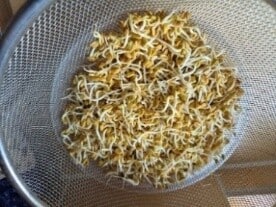
Sprouting changes the physical structure of fenugreek. The dry seed absorbs water, softens and begins a series of biochemical changes associated with germination.
These changes can make the seed easier to handle and may alter the availability and digestibility of some nutrients. Germination can also reduce certain compounds, including some antinutritional factors, although the magnitude of these changes depends on the conditions and duration of sprouting.
In the original article, the appearance of a small white sprout tip after approximately 24–48 hours is described as a practical indication that the seeds have germinated. The precise time depends on temperature, moisture and seed condition.
Key point: Germination makes hard fenugreek seeds softer and changes their nutritional properties. It does not, by itself, establish that sprouted fenugreek produces better health, fertility or chick growth in budgerigars.
Dry Versus Sprouted Fenugreek
| Characteristic | Dry Fenugreek | Sprouted Fenugreek |
|---|---|---|
| Texture | Very hard and angular | Softer and more tender |
| Taste / Aroma | Distinctive, often bitter | May become milder |
| Nutritional composition | Nutrients stored in the dormant seed | Germination changes enzyme activity and some nutrient levels |
| Digestibility | Contains phytic acid and other antinutritional compounds | Some antinutritional compounds may be reduced |
Breeding Instincts, Plant Compounds and Crop Food: What Does the Science Say?
Fenugreek has a long history of traditional use in connection with reproduction and milk production. This has led to interest in whether naturally occurring constituents of the plant could have useful effects in breeding birds.
The article discusses compounds including diosgenin, a plant-derived steroidal saponin. However, the presence of such compounds does not mean that budgerigars convert them into reproductive hormones or experience increased fertility when they consume fenugreek.
A study by Hooda and Jood (2003) investigated germinated fenugreek and found changes in nutritional properties, including improved in vitro digestibility of proteins and starch. Changes in protein and lysine content were also reported.
These findings are relevant to the effects of germination on fenugreek as a food ingredient, but they are not direct evidence of improved reproduction or breeding performance in budgerigars.
Important Scientific Qualification
Claims that fenugreek increases reproductive hormones, sperm quality, mating drive, egg production or the nutritional value of food regurgitated to budgerigar chicks require further research specifically involving budgerigars.
Findings from laboratory experiments, traditional herbal use and other animal species cannot automatically be applied to budgerigars.
Fenugreek and Breeding Behaviour
Possible effects on breeding instincts and fertility are discussed in the original source. While this is an area of interest, it should be viewed as a hypothesis rather than a proven method of improving breeding outcomes.
Breeders should not rely on fenugreek to stimulate fertility or treat reproductive difficulties.
Does Fenugreek Improve Crop Food?
In mammals, fenugreek has traditionally been described as a galactagogue, a substance associated with milk production. Budgerigars, however, do not have mammary glands and do not produce true crop milk in the same way as pigeons.
Budgerigar parents feed their chicks regurgitated food containing partially digested material and crop secretions.
Although the nutrients eaten by parent birds are relevant to the nutrition they provide their chicks, it has not been demonstrated that feeding fenugreek specifically increases the protein, amino acid or fat content of budgerigar crop food, or improves chick development.
Risks, Preparation and Acclimatisation
The greatest practical concern with sprouted seed is hygiene. Warm, moist germination conditions can also encourage the growth of bacteria and moulds, including organisms such as Salmonella and E. coli.
Careful preparation is therefore essential. The original article recommends rinsing germinating seeds thoroughly with cold water two to three times daily, discarding any batch that develops a musty or sour smell or a slimy texture, and promptly removing uneaten food.
Rinsing alone does not guarantee that sprouts are free of harmful microorganisms. Use clean equipment, suitable food-grade seeds and careful handling. Seek advice from an avian veterinarian if unsure whether sprouted foods are appropriate for your birds.
Introducing Sprouted Fenugreek
Budgerigars can be cautious with unfamiliar foods. The original article suggests introducing a small amount of sprouted fenugreek into an established sprouting mixture and allowing the birds time to become familiar with it.
Fenugreek should never be offered as the sole staple food; it is best considered a possible supplement within a varied and balanced diet.
Suggested Use in the Original Article
- Frequency: One to three times weekly during preparation for breeding
- Proportion: No more than approximately 5–10% of the sprouting seed mix
- Removal: Discard uneaten sprouts promptly; the source suggests within two to four hours as a more cautious limit
These are suggestions from the supplied article, not experimentally established budgerigar feeding doses.
Conclusion: A Potential Supplement, Not a Miracle Ingredient
Fenugreek is a fascinating plant with a long history of use in food and traditional herbal preparations. Its seeds have an interesting nutrient composition, and germination can soften them and change their digestibility and nutritional characteristics.
For budgerigars, sprouted fenugreek may be offered as a small supplementary ingredient within a varied diet, provided that safe handling and strict sprouting hygiene are maintained.
However, the claimed benefits for reproduction, fertility, immunity and chick feeding have not been firmly established in budgerigars. More species-specific research is needed before these effects can be treated as proven.
As with any change to a feeding program, moderation, observation and sound husbandry remain important.
Author and Source Acknowledgements
Article and photographs: Peter van Amelsvoort. The supplied document also acknowledges AI processing, internet and Wikipedia material, and DSV Show 2026.
Research and books named in the original document:
- Hooda & Jood (2003) – research on germination and nutritional characteristics of fenugreek
- Dr Heinrich Neuthaler – Das große Heilkräuterbuch (The Big Book of Medicinal Herbs)
- Lesley Bremness – Herbs: The Identification Guide for More Than 700 Herb Species from Around the World
- Pharmacist M. Pahlow – Das große Handbuch der Heilpflanzen (The Big Handbook of Medicinal Plants)
ANBC reader note: This article is presented for general educational interest. It is not a substitute for professional avian veterinary or nutritional advice. Potential benefits discussed from non-budgerigar research should not be assumed to be proven in budgerigars.