Australian National Budgerigar Council


Jamie Wright
For some people, budgerigars are a hobby they discover later in life. For others, they become part of the furniture from childhood onwards. In Jamie Wright’s case, it all began at the age of nine. At that age, his grandmother gave him a Dominant Pied Sky Blue budgerigar named, with all the creativity you might expect from a nine-year-old, Bluey.
There have been a few short breaks along the way, but for the most part budgerigars have remained part of his life ever since. Through National wins, judging, State Team involvement, breeding successes, disappointments and some important lessons learned the hard way, the hobby has provided much more than birds. Indeed, it has created friendships, opportunities and a community that continues to draw him back.
A Birdroom Built Around Balance
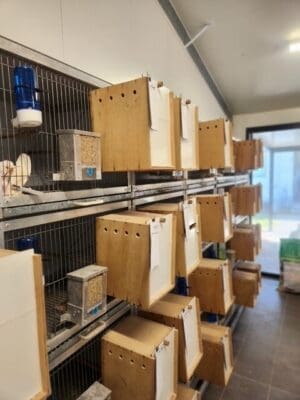
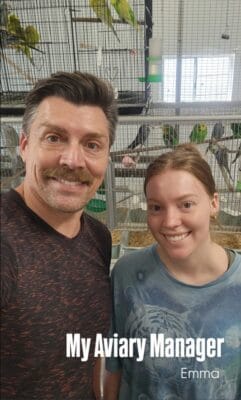
Today, the birds are housed in a backyard birdroom incorporating a free-flight aviary. There is also a breeding room capable of holding up to 32 breeding cabinets. There is also an important philosophy behind the setup: efficiency. The birdroom has been designed to reduce the amount of time required for routine jobs such as feeding, watering and cleaning. With business, fitness, family and friendships all competing for time, the birds need to complement life rather than dominate it.
“I operate best when life has balance.”
The construction of the birdroom also demonstrated one of the hobby’s recurring themes — mateship. Troy Smith, Garry Menzies and Trevor Broadbent all played a role in helping line the birdroom. However, Troy apparently loses a few points for making the owner re-roof it in the sweltering sun while nursing a hangover.
As he puts it, regardless of experiences such as that, the hobby has a wonderful ability to provide some great mates.
Moreton, Showing and Favourite Varieties
An Open breeder, Jamie is a proud member of the Moreton Budgerigar Club on Brisbane’s northside. For him, the attraction of Moreton is as much about its people and atmosphere as anything else. The club has a positive outlook, members work well together and there is a genuine desire to further the fancy and create opportunities for breeders. His interests cover most of the mainstream varieties, including Normals, Opalines, Cinnamonwings, Dominant Pieds and Spangles. Inos have also featured successfully in the past, while Lacewings retain a particularly special place.
There was even a venture into Clearwings which ultimately produced a third placing at the Nationals. However, with time now at a premium, recessive varieties are unlikely to feature heavily in the immediate future.
The Importance of a Good Mentor
Ask what advice Jamie would give somebody looking to progress in the budgerigar hobby and one subject comes quickly to the surface: find a mentor. But simply having a mentor isn’t enough. Choosing the right mentor matters. A good mentor should be experienced, knowledgeable and capable of giving objective advice that helps another breeder achieve their own goals. They can assist with selecting birds to purchase and pairing decisions. Also, they can help navigate the countless problems that inevitably arise in a working breeding stud.
There is another part of that relationship which is sometimes forgotten. Mentoring shouldn’t simply be about one person giving and another taking. Whether it is friendship, helping around the birdroom or simply finding another way to contribute, strong mentoring relationships should contain an element of mutual benefit.
“A one-sided relationship means someone gives, and the other takes, and takers just aren’t cool.”
National Wins — and a Lesson Learned
There have been plenty of memorable moments over the years, but winning a first National understandably sits high on the list. It was unexpected and thrilling — although what happened afterwards provided an equally memorable lesson. Excited by the possibilities offered by the winning cock, he became impatient and attempted to move the bird across too many hens. This was at a time when artificial insemination was relatively new. Moreover, traditional pairing remained the approach.
Without the normal opportunity to court, pair and behave naturally with a hen, the cock’s behaviour changed to the point where the hens wanted little to do with him. The result? Very little from a bird that might otherwise have produced many chicks over time. The lesson was simple: impatience and greed can work against a breeding program.
The second National win produced another unexpected reaction — a tear in the eye. There are also proud memories away from the show bench. Being part of the Australian White Cap Subcommittee responsible for drafting The Standard for the variety was particularly rewarding. The process was, in his words, a little like “herding cats”, but eventually the group got there.
Quality Is About Depth
When asked to nominate the best bird he has ever bred, there isn’t one obvious answer — and he is almost pleased about that. The reason is his belief that a genuinely strong stud should not depend upon one exceptional bird. Depth matters.
A successful program should produce a number of quality birds regularly and over time. Some birds become memorable because of what they achieved in the breeding room, others because of what they achieved on the show bench. Finding the bird capable of doing both can be much harder. There is also something less measurable that matters. Budgerigars should bring their owner joy simply by looking at them.
That appreciation of quality is one reason he continues to enjoy his involvement as a Carer/Preparer for the South Queensland State Team. Even when the birds belong to somebody else, working closely with quality budgerigars provides enormous satisfaction.
Building a Bloodline
Returning to the hobby after an absence meant rebuilding with birds from several different breeders. Jamie readily acknowledges that this means “standing on the shoulders of great breeders who came before”. His purchasing philosophy is centred around breeders who have demonstrated depth within their breeding programs. A lesser bird from a consistently successful family may sometimes have a better opportunity to contribute genetically than an isolated standout. That certainly doesn’t mean buying anything simply because it carries the name of a successful breeder; the individual still needs to possess useful quality features. But where possible, those qualities should come from a stud producing them consistently. Another lesson from years of maintaining his own families concerns hens.
Don’t oversell your home-bred hens.
Hens raised within the home stud are generally more accustomed to the environment and can prove easier to breed with. Anything that makes the breeding season easier is worth considering.
Beefcake Kitty, The Goddess and Rizz
Historically, naming birds wasn’t something that happened in this birdroom. Helen Hibberd, however, demonstrated that giving them names can add another element of fun.
The current roll call now includes:
- Beefcake Kitty — Opaline Light Green
- Sideshow Sally — Opaline Cinnamonwing Grey Green
- Denise — Normal Light Green
- The Goddess — Cinnamonwing Grey
- Rizz — Ino
- Stan — a Normal Grey Green named because “he puts on a good show”
- Derek — Pied
It may not be the most conventional method of identifying breeding stock, but it certainly makes conversations about the birdroom more entertaining.
Feeding, Fitness and Natural Behaviour
The feeding regime itself is relatively uncomplicated. A seed mixture is purchased through the club, millet sprays are provided in nest boxes containing chicks, and a soft food recipe originally provided by Trevor Broadbent forms another part of the program. Cuttlefish and calcium blocks are freely available. Chickweed is grown through winter, while kale, spinach, carrot, silverbeet, beetroot and other vegetables are purchased as required.
Water is generally kept simple unless there is an identified need within the birdroom, and routine medication is not a major part of the program. Bringing birds into the stud from several different sources recently required some medication, but the longer-term intention remains to treat only when required. The subject that generates considerably more enthusiasm is fertility, fitness and natural behaviour.
Vitality comes first. Birds need to demonstrate the physical vigour associated with normal reproductive function, while the environment should encourage natural behaviour. Both sexes are flown together, allowing birds to court, establish pair bonds and develop the behaviours required when they eventually enter the breeding cabinet. Cock birds also help keep hens active, and fit hens are generally preferable to over weight hens when breeding begins.
Foraging and enrichment are another important part of the program. Something as simple as hanging silverbeet from the aviary roof transforms food into an activity. Birds need to fly to it, compete for access and interact with each other while feeding.
Exercise is equally important. Having spent many years as a competitive swimmer, he draws parallels between athletic development and developing young budgerigars. Young birds are placed into an aviary where they can fly, explore and build their bodies naturally.
“My babies have always been thrown in an aviary to explore, and develop their frame to its best ability. Worked for me, so I use it for them.”
Tradition Should Guide — Not Control
One concern about the hobby is the tendency to use phrases such as “because we always have” or “tradition” as complete arguments against change. Tradition has value and deserves to be considered, but society has changed considerably and the hobby needs to recognise that when making decisions. His preference is for an attitude that gives change and evolution an opportunity.
An example came during discussions on the Australian White Cap Standard. His initial view was that recessive varieties should not be combined with the Australian White Cap because they did little to advance the variety itself.
Jim Fletcher offered another perspective: exhibitors should have the freedom to enjoy Australian White Caps in whatever combinations appealed to them, and advances made through the Australian White Cap could ultimately benefit other varieties as well. It was an argument that changed his thinking.
Recessive combinations were permitted, and at the 2026 Nationals a Crested Australian White Cap went on to win the Crested Class. The broader lesson was more important than the individual decision. Sometimes stepping away from our own ideas and seriously considering somebody else’s can produce an outcome that benefits a much wider group.
Innovation also requires accepting that not every idea will work.
“Falling is a natural part of learning to walk, and there should be some freedom to try new ways without a fall defining the path to being able to run.”
And, he jokingly warns, if anybody decides to use that quote they had better reference him appropriately.
Coming Back to the Birds
Four years away from keeping budgerigars provided an opportunity to devote more time to work and personal priorities. Importantly, leaving the birdroom never meant completely leaving the hobby. The friendships remained.
Close mates were convinced the return would eventually happen, even when he wasn’t convinced himself. Rather than applying pressure, they simply remained friends and allowed that decision to happen in its own time. Eventually, the enjoyment of quality birds, judging and involvement with the South Queensland Carer/Preparer team combined with those friendships to make returning feel right.
“It’s really the friendships that underpin everything. Without my mates, the other stuff would be lonely and not very rewarding.”
What Does Success Look Like?
Success isn’t measured solely by trophies. First, the birds need to be virile and breed well. A productive breeding season produces sufficient youngsters to progress the home stud while also giving birds sold to other breeders a greater opportunity to contribute elsewhere.
State Team representation remains another major goal. Having a home-bred bird selected to represent the State and compete against Australia’s best is a significant honour — and once a bird makes the team, naturally the aim is to see it reach the top bench.
Winning a National remains an obvious ambition, but experience has changed the emphasis.
“I focus on the process, not the outcome. Sport has taught me that.”
Judging also forms an important part of that definition of success. Great judges do more than place birds from first to last. They give something back to the hobby, guide exhibitors and encourage breeders to continue striving for improvement.
Life Beyond the Birdroom
Budgerigars are only one part of a busy life. For around 20 years sport has also played a major role. Competitive swimming continued until retirement from the sport in 2021, after which water polo became the next competitive outlet. These days his own Tritons water polo team earns the title of favourite sporting team. Regular gym work remains part of the routine, while social media has unexpectedly provided another creative outlet. What might sometimes appear to be a collection of humour and silliness has also provided an opportunity for creativity, self-expression and positivity. Improv theatre and art add further creative interests.
As for life’s other important questions, favourite food is fairly straightforward: anything somebody else has cooked. Eating out wins comfortably, provided lamb and coriander remain off the plate. Favourite movies are The Grinch and Yes Man, both starring Jim Carrey, with the messages behind the films being the biggest attraction. And the three things still sitting prominently on life’s list?
Travel more. Invite more love into life. And pursue success — whatever success happens to mean at that particular point in the journey.
Perhaps that last thought also captures his approach to budgerigars rather well. Birds change. Goals change. The hobby changes. Success itself changes. But underneath it all remain the enjoyment of quality budgerigars, the challenge of continually improving and, most importantly, the friendships created along the way.