Australian National Budgerigar Council


Peter Glassenbury by Carol Gough
ANBC Fancier in Focus | From the Archives
Peter Glassenbury – A Lifetime of Budgerigars, Black-Eyed Selfs and National Success
South Australia | Nationally Accredited Judge | Exhibition Budgerigar Breeder
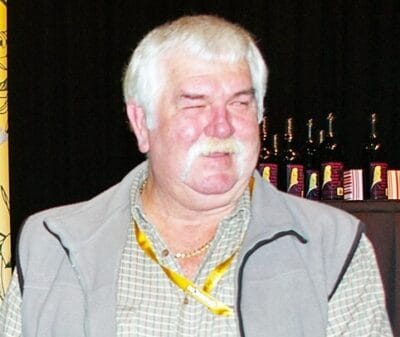
Few individuals embody the dedication, experience and friendship of the Australian Budgerigar Fancy quite like South Australia’s Peter Glassenbury. From his childhood beginnings in Clare to success at the Australian National Budgerigar Championships, Peter’s involvement in exhibition budgerigars has been shaped by a lifelong fascination with the birds and the people who breed them.
A nationally accredited judge, accomplished exhibitor and knowledgeable breeder, Peter has long been associated with the Black-Eyed Self variety, while his experience extends across almost every variety of exhibition budgerigar.
In this special edition of ANBC Fancier in Focus, we revisit an extensive interview originally conducted by Carol ahead of the May 2010 National Championships in Rockhampton. Peter discusses his journey through the Fancy, his approach to breeding and judging, the importance of maintaining strong bloodlines and why friendship remains the greatest reward of all.
Peter Glassenbury – At a Glance
- Home State: South Australia
- Hometown: Clare, South Australia
- First Budgerigars: Mid-1950s
- Early Achievement: Best in Show at Port Pirie in 1959
- Judging: Nationally Accredited Judge
- Signature Variety: Black-Eyed Self
- Other Varieties: Cinnamons, Normals, Pieds and Spangles
- National Achievement: Black-Eyed Self Class Winner
- Breeding Philosophy: Plan ahead, breed with purpose and enjoy the hobby
Editor’s note: This feature is adapted from a historical interview. Peter’s comments about breeding practices, ring regulations, exhibition arrangements and the Fancy reflect the period in which the interview took place.
A Childhood Passion That Became a Lifetime in the Fancy
Peter’s introduction to budgerigars began in the mid-1950s when his parents purchased two pairs of birds for him as a child. After two successful rounds of chicks, the original cage was no longer large enough, and a new aviary measuring 12 feet by 6 feet was constructed in the family backyard. However, the young enthusiast soon discovered that he was no longer entirely in charge of the breeding program.
“It was not long before I realised I was not the breeder anymore as my parents had taken over.”
Peter was allocated two breeding boxes of his own, housing a pair of Cinnamons and a pair of Cinnamonwing Yellows, from which he could also produce Black-Eyed Yellows. It was an early introduction to the genetics and breeding possibilities that would become such an important part of his life.
In 1959, Peter bred a Black-Eyed bird that went on to win Best in Show at Port Pirie, against an entry of approximately 800 budgerigars. That remarkable early success helped establish his passion for breeding exhibition budgerigars.
From Clare to the Northern Territory – And Back Again
In 1966, Peter joined the E S & A Bank and was transferred from his hometown of Clare to the Northern Territory. The move brought the first chapter of his budgerigar breeding career to an end. His parents continued breeding and exhibiting at major shows throughout South Australia until his father’s passing in 1970. Following his death, Peter’s mother sold the entire stud for just two shillings, or 20 cents, per bird, regardless of quality.
After numerous transfers with the bank, Peter eventually returned to South Australia, settled into family life and, in the early 1980s, purchased two pairs of colourful budgerigars for his children. Those birds unexpectedly produced three Black-Eyed chicks.
For Peter, it was a sign that the time had come to return to the hobby.
“I saw this as an omen. I did my parents trick and moved the kids aside and started breeding again myself.”
What began as a childhood hobby had once again become an enduring passion.
Breeding for Strength, Quality and Natural Vigour
One of the strongest themes throughout Peter’s approach to breeding has always been his belief in maintaining hardy, healthy birds. His philosophy draws heavily on nature and the idea that a strong breeding stud should possess the vigour necessary to thrive. At the time of the interview (2010), Peter explained that his feeding program was relatively straightforward.
A Simple Feeding Program
The foundation of his birds’ diet consisted of Canary Seed, Japanese Millet and White Millet. He also provided a separate mixture of dry large parrot seed as a treat, which doubled as a wet food mixture during the breeding season with the addition of hulled oats.
Other items supplied included:
- Gum branches when available
- Fresh lawn grass trailers
- Silverbeet
- Hard grit and shell grit
- Cuttlefish bone
- Access to natural sunlight and rain through exposed aviary sections
Peter believed the natural environment played an important role in maintaining healthy birds and sought to provide opportunities for them to experience fresh air, sunshine and rain. He also described the historical health-management practices used in his aviaries, including preventative antibiotic treatment before breeding and providing warmth and medication to sick birds.
These comments document Peter’s practices at the time of the interview and should not be interpreted as current veterinary recommendations. Antibiotic use and the treatment of unwell birds should be guided by an avian veterinarian.
A Stud Built Around Variety and Experience
Peter explained that he maintained three aviaries, with numbers reaching approximately 200 birds at the peak of the breeding season. Numbers were then reduced through selection, retaining those birds considered most suitable for the future breeding program.
His main varieties were Black-Eyed Selfs and Cinnamons, supported by Normals, Pieds and Spangles. He also liked to maintain a variety of particular interest for experimentation and enjoyment. Importantly, his knowledge was not restricted to those varieties.
As a judge, Peter had deliberately bred all varieties at some stage to develop a stronger understanding of their individual characteristics, strengths and challenges. This practical experience provided a valuable foundation for his judging career.
The Black-Eyed Self – Peter’s Signature Variety
Perhaps no variety has been more closely associated with Peter’s exhibition successes than the Black-Eyed Self. His achievements with the variety included a National Championship class victory, but behind that success was a carefully managed breeding program and a realistic understanding of the numbers required to produce competitive birds.
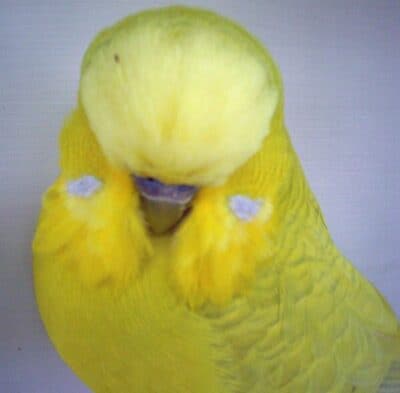
National Championship Achievement
Black-Eyed Self Class Winner
Peter Glassenbury – South Australia
Breeding Black-Eyed Selfs
Peter explained that most of his Black-Eyed Self pairings were made within the variety itself. He maintained approximately five related families, crossing between them as part of his breeding program. His aim was to produce around 50 Black-Eyed Self chicks each year.
Even with careful pairing and selection, he estimated that only around 10 per cent of those birds might develop into quality exhibition specimens. Importantly, there was no guaranteed formula for producing that percentage.
“This variety is a numbers game.”
Introducing an Outcross
While Peter’s Black-Eyed Self families were largely bred together, he periodically introduced an outcross when a suitable bird became available. His preferred outcross was a particularly good Cinnamon Dark Green hen. The reasoning was deliberate: it allowed him to introduce desirable exhibition characteristics while avoiding the introduction of Opaline into the line, which he believed could increase the number of unwanted outcomes.
Body colour was also an important consideration. If colour quality began to decline, Peter would select pairings designed specifically to restore it. For him, a successful breeding program required the careful balancing of variety characteristics, body colour, feather and overall exhibition quality.
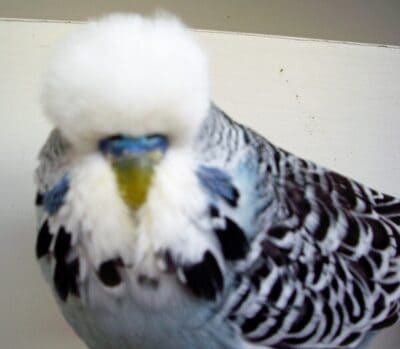
Planning Two Years Ahead
Although Peter described his approach as having no rigid breeding strategy, one principle consistently guided his decisions: thinking at least two years ahead. He explained that when young birds were still in the training cage, he was already considering potential mates for the following breeding season. On occasions, he even paired birds with the specific intention of later mating their offspring together.
Any outcross introduced into the stud needed to serve a clearly identified purpose. Peter did not believe in bringing in new blood simply for the sake of doing so. Instead, the bird needed to possess a particular feature or characteristic that was required within his existing bloodlines.
Visual Selection and Pedigree
Peter’s initial pairings were generally based on the physical appearance and characteristics of the birds. Once he had selected prospective pairs, he would consult his breeding records, particularly with the Black-Eyed Self families, to check how closely related the birds were. Cousins were generally as close as he preferred to breed.
With other varieties, Peter explained that he could often identify the birds and their parents visually without needing to consult the records.
The Importance of Head Quality
When asked which exhibition features he was concentrating on, Peter identified structural head width and back skull as his primary targets. He believed that many desirable characteristics followed naturally when the underlying head structure was correct. These qualities could often be recognised in chicks as young as one week old by observing their bone structure. Feather length was another important component.
“Structural head width and back skull are the primary targets for me as so much follows with these features.”
When the correct head structure and feather length came together, Peter believed the result was generally the type of bird he was seeking.
Why Good Normals Remain Important
Peter also discussed the importance of maintaining quality Normal budgerigars within a breeding program. While some breeders struggled to produce sufficient Normals, his approach was to consider how each variety would influence the stud over the following two years.
He maintained relatively few Opalines, which reduced the challenge of unwanted Opaline offspring. He also preferred to use Normals strategically with Pieds and Spangles, helping him maintain a continuing supply of useful breeding birds.
This reflected his broader philosophy of balancing exhibition potential with long-term genetic planning.
A Judge’s Perspective on the Standard
Having bred almost every variety, Peter brought considerable practical experience to the judging bench. His observations on variety standards, faults and exhibition quality reflected the sometimes difficult decisions judges must make when assessing birds.
Dilutes and Suffused Budgerigars
At the time of the original interview (2010), the acceptance and terminology surrounding Suffused budgerigars were subjects of discussion. Peter explained that, as a breeder, he had no objection to the variety being included in National competition, noting that some very attractive examples existed. However, from a judging perspective, he believed it would be important to distinguish true examples of the variety from poor-coloured Black-Eyed Selfs or Greywings.
He personally preferred the term Dilute to describe the variety, while acknowledging the decisions that had been made regarding terminology.
Flecking on the Show Bench
Another topic was flecking, a characteristic that had generated considerable debate amongst exhibition breeders. Peter believed flecking was likely to remain part of exhibition budgerigar breeding and that breeders needed to manage it within their programs. He considered flecking a fault that should be penalised appropriately when judging.
However, he also believed that a bird displaying some flecking could still deserve to win if its overall exhibition quality was substantially superior to the competition. His view was that the complete bird must ultimately be assessed.
“If the overall bird is far superior … and the flecked bird is still the best overall budgerigar it must win.”
From a breeding perspective, Peter believed careful pairing was essential to managing the characteristic and warned against repeatedly pairing flecked birds together.
Inside Peter’s Aviary Setup
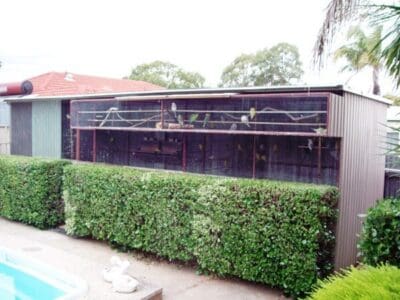
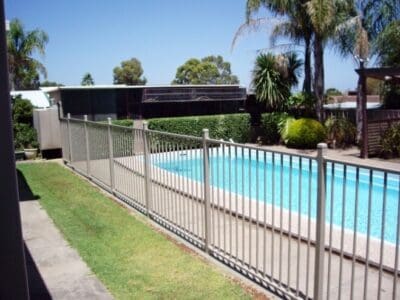
Peter’s aviaries were designed around the available space of his residential property, with the family swimming pool occupying a significant portion of the backyard. Although he would have preferred larger facilities, the setup was practical and allowed him to manage a substantial breeding and exhibition program.
The Flight Aviaries
At the time of the interview, the facilities included:
- Main Flight: 14 feet x 7 feet
- Attached Flight: 7 feet x 7 feet
- Detached Aviary: 8 feet x 6 feet
- Construction: Steel framework with cement floors
- Fronts: Partially open, allowing access to natural conditions
- Roof: Galvanised sheeting with shade-cloth covering
- Cooling: Sprinkler system for periods of extreme heat
- Additional Features: External lofts and removable perch sections
The concrete floors made cleaning easier and helped prevent vermin from entering the aviaries. Peter also provided outside sections where the birds could experience natural weather conditions. With South Australian summer temperatures occasionally exceeding 40 degrees Celsius, shade cloth and a sprinkler system were used to help reduce the heat.
The two adjoining aviaries could also be opened into one larger flight when required. Peter was particularly mindful of overcrowding and used additional removable perch sections to ensure adequate space before the number of birds was reduced following selection.
The Breeding Room
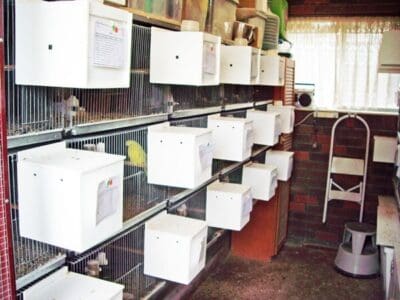
The breeding room measured approximately 12 feet by 7 feet and formed part of an attached storage room in a solid-brick granny flat. It was insulated and provided with airflow through a window and a door positioned at opposite ends. The room contained 30 breeding cabinets, divided equally between wire cages and melamine-coated wooden cages.
Six of the wooden breeding cabinets could be converted into three training cages for young birds, reducing the number of available breeding cabinets to 24 for a second round. The nest boxes were constructed from plywood and featured removable pine concave bases. Peter also designed the nest-box lids so that they could be reversed to improve airflow during hot weather. Untreated pine sawdust was used as the nesting material.
Peter’s Approach to Pairing and Breeding
Peter’s breeding methods were founded on experience, observation and an understanding of when the birds were ready to breed.
Breeding Condition Versus Show Condition
He made an important distinction between show condition and breeding condition. In Peter’s experience, the two were approximately six weeks apart. Once a bird reached the appropriate feather condition, it then needed time to develop the body condition necessary for breeding. He preferred to breed when the birds were naturally in condition rather than strictly following the ring-issue calendar.
At the time, he was able to breed an initial round in July and August, followed by another in September and October, with the rounds receiving different ring colours.
Peter believed this arrangement could benefit South Australian breeders, allowing them to breed during more suitable weather conditions rather than battling extreme summer heat.
Introducing the Nest Box
Peter explained that he placed the nest box on the breeding cabinet at the same time as introducing the pair. He preferred to introduce the cock and hen together, rather than placing either bird in the cage first. His reasoning was that placing hens into breeding cabinets ahead of the cock could sometimes encourage them to become overly attached to the nest box.
Conversely, placing the cock in first could create problems if a dominant male became aggressive towards a timid or inexperienced hen. His preference was to introduce both birds together and assess compatibility. At the time of the interview, Peter described the following approach:
- If the hen had not entered the nest box within approximately seven days, the pair would be removed.
- If eggs had not appeared after a further 14 days, the pairing would also be reconsidered.
- If a pair produced an infertile round, he preferred to try the birds with different mates rather than repeatedly breeding the same unsuccessful pairing.
He also explained that he trimmed feathers and down around the breeding area before pairing, believing this improved the opportunities for successful mating.
Fostering and Managing Chicks
Peter used older breeding pairs as foster parents where appropriate. He preferred to maintain approximately four chicks per nest and would transfer similarly aged chicks between nests after they had been rung. Where egg transfers were necessary, he preferred to place them under foster pairs that could not produce the same variety, making it easier to identify the offspring correctly.
Black-Eyed Selfs were particularly useful in this regard. Peter also explained that, when moving an egg, he tried to maintain its orientation as closely as possible.
Exchanging Birds Rather Than Sharing Nests
When asked about sharing breeding nests between fanciers, Peter expressed a preference for exchanging birds instead. His concern was that jointly breeding from a nest could sometimes create disagreements if one breeder appeared to benefit more than another.
He preferred both breeders to have complete control over their own breeding programs after exchanging a bird. For such arrangements to succeed, he believed there needed to be mutual trust, similar expectations and a shared understanding of the risks involved.
Preparing a Team for the National Championships
Peter’s approach to preparing birds for the Nationals began long before the selection weekend. Birds showing National potential were identified in the training cage, where individual show-cage training commenced. He also liked to exhibit prospective team members at club shows so they became accustomed to travelling and the show environment.
Approximately eight weeks before the traditional May National weekend, promising birds were caught and examined for broken tail and flight feathers.
At that time, Peter described removing damaged feathers as part of his preparation routine. Spraying formed part of the preparation process leading up to the Nationals. Around three weeks before the event, the birds were moved indoors and housed at approximately six birds per double breeding cabinet.
Shell grit was placed deeply across the floor to help prevent feather soiling. From that point, Peter believed it was largely up to the birds to perform at the pre-selection show.
The Nationals – Success on the Bench and Friendships Beyond It
Peter’s National Championship successes, particularly with the Black-Eyed Self, were a significant source of personal satisfaction. Getting a bird into the top row at the Nationals was always a goal, and winning a class provided an even greater reward. However, he was equally enthusiastic about the social side of the National weekend.
“The real treat is to catch up with people annually at that show weekend.”
At the time of the interview, Peter said he had missed only two National Championships since the late 1980s. For him, the opportunity to renew friendships and spend time with others who shared his passion was every bit as valuable as the exhibition results.
South Australia’s National Selection Philosophy
Peter also reflected on the challenges facing smaller states in National competition. At the time of the interview, he explained that South Australia effectively had four clubs, each presenting three birds in each class for the pre-selection process.
Birds were selected in order and generally exhibited in that same order, with the third selected bird acting as a reserve.
Peter believed the process was straightforward and helped avoid unnecessary disagreements about team selection.
He acknowledged that larger states enjoyed a numerical advantage, sometimes having many more birds from which to select their teams.
However, he believed that even when a smaller state had fewer birds, a particularly good specimen could still defeat the competition.
South Australia’s approach was to make the most of its available birds and be competitive wherever possible.
Keeping the Nationals a Young Bird Competition
Peter was also a strong advocate for maintaining the Nationals as a young bird championship.
When the possibility of allowing birds from two different ring years was raised in the original interview, he expressed strong opposition.
He believed the original purpose of the competition should be preserved.
The Importance of Every Variety
Peter supported the National Championship format in which each variety competed against others of the same variety.
He believed this approach had helped Australia retain a wide range of budgerigar varieties within its exhibition Standard.
He also questioned whether too many activities were being fitted into the National weekend, suggesting that a greater emphasis should be placed on the showing itself.
Rather than expecting smaller states to compete with larger states through numbers alone, Peter believed they needed to work smarter and seek creative approaches to supporting the National event.
Club Shows and Promoting the Fancy
Peter remained a strong supporter of local club shows and agricultural exhibitions.
He believed agricultural shows were particularly valuable because they presented an opportunity to introduce budgerigars to members of the general public.
At the time, South Australian clubs generally conducted an adult or open show and a young stock show each year, with entries varying considerably between events.
Peter also discussed the value of pre-selection events and the importance of reducing unnecessary stress on birds being prepared for National competition.
He explained that he regularly supported his own club shows and enjoyed exhibiting at agricultural shows whenever possible.
His judging commitments, however, often prevented him from attending as many shows as he would have liked as an exhibitor.
On the subject of Nestfeather competition, Peter preferred South Australia’s then relatively limited approach, with the principal Nestfeather event being an interclub competition.
Away from the Birdroom – Getting to Know Peter
Carol’s original interview also offered a glimpse of Peter’s personality beyond the show bench, with a series of light-hearted questions.
Favourite food?
“Feed the man meat.”
Favourite drink?
“Beer goes down well.”
Favourite sport?
Australian Rules Football, with Peter maintaining his allegiance to South Clare.
Favourite music?
Easy listening – something Peter believed the birds enjoyed as well!
His answers reflected the humour and down-to-earth nature that had helped make him a well-regarded figure amongst his fellow fanciers.
Peter’s Advice to Fellow Fanciers
After discussing decades of breeding, exhibiting, judging, show preparation and the finer points of exhibition budgerigars, Peter offered some final advice.
His message was refreshingly simple and reflected what he considered to be the true purpose of the hobby.
“This thing we do is a hobby so enjoy it as such. Keep politics out of it and have fun with the people that have a similar interest as yourself.”
– Peter Glassenbury
It is a sentiment that remains relevant to exhibition budgerigar breeders today.
While National wins, Grand Champion awards and successful breeding seasons are important achievements, the friendships formed through the Fancy often provide its greatest rewards.
Peter’s story demonstrates the value of knowledge gained through experience, an appreciation for the full range of varieties and a willingness to contribute to the hobby through breeding, exhibiting and judging.
Above all, his advice serves as a reminder that the enjoyment of the birds and the company of fellow enthusiasts should remain at the heart of the Budgerigar Fancy.
Acknowledgement
The Australian National Budgerigar Council acknowledges Carol for conducting the original interview and Peter Glassenbury for sharing his experiences, knowledge and observations on the Fancy.
This archival interview provides an insight into Australian exhibition budgerigar breeding, judging and National competition during an earlier period in the Fancy’s history.
About ANBC Fancier in Focus
The Australian National Budgerigar Council’s Fancier in Focus series celebrates the breeders, exhibitors, judges and personalities who have contributed to the development and enjoyment of exhibition budgerigars across Australia.
Through their stories, experiences and reflections, we recognise the people behind the birds and preserve the knowledge, history and friendships that continue to shape the Budgerigar Fancy.
Historical feature: The observations and opinions expressed are those of the original interviewee and relate to the period of the interview. They do not necessarily represent current ANBC policies, the current Australian National Budgerigar Standard or contemporary veterinary recommendations.