Australian National Budgerigar Council


The Year The Nationals Went Global
Seed of Nostalgia: Canberra 2011 – The Year the Nationals Went Global
There are some Australian National Budgerigar Championships remembered for a great bird, a dominant Zone performance or a dramatic result. Then there are Nationals that seem to capture a moment when the hobby itself was changing.
Canberra 2011 was one of those years.
Held on 28 and 29 May 2011, the 37th Australian National Budgerigar Championships brought together 21 birds in every class, an international judging presence, one of the closest team contests of the era and, for the first time, the World Budgerigar Organisation Annual Meeting on Australian soil. It was also the first time the WBO gathering had been held anywhere in the Southern Hemisphere.
For one weekend, Canberra was not simply the centre of Australian budgerigars. It became one of the centres of the worldwide fancy.
The World Comes to Canberra
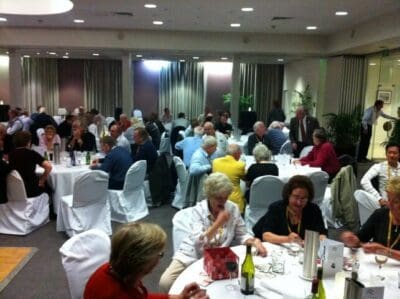
Hosted by the Budgerigar Society of New South Wales, the Nationals were centred around Canberra’s Marque Hotel, while the historic WBO meeting was held nearby at the Rex Hotel.
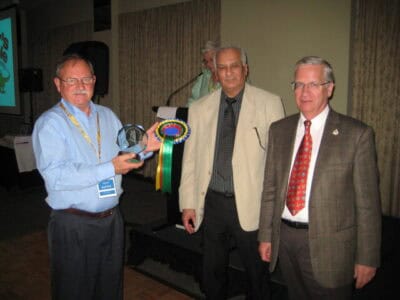
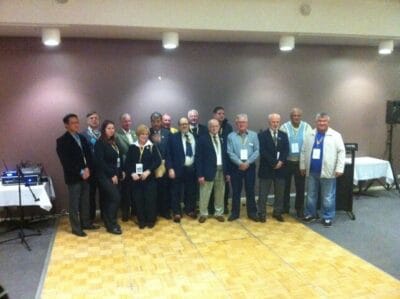
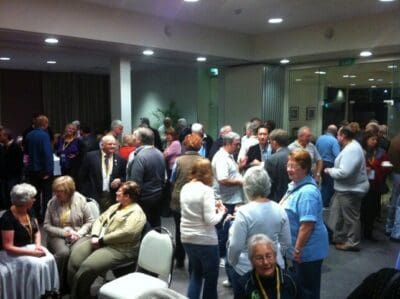
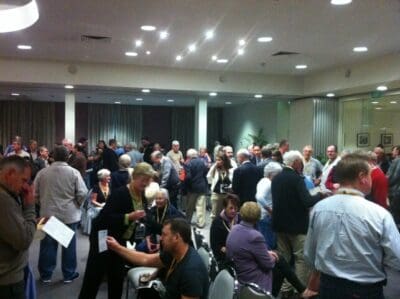
The list of international visitors demonstrated just how significant the occasion was. WBO President Gerd Bleicher of Germany, Vice President Carlos Romao of Portugal and Secretary Ghalib Al-Nasser of the United Kingdom were joined by delegates and visitors from Ireland, Canada, France, Italy, New Zealand, South Africa and Turkey.
Australia was represented at the WBO meeting by ANBC Secretary Bob Bourke and ANBC Historian Leigh Downey, while ANBC and BSNSW President Warren Wilson was also present.
For Australian fanciers accustomed to travelling overseas to connect with the international hobby, there was something particularly significant about seeing the world come to us.
It provided an opportunity to exchange ideas, compare standards and strengthen relationships between Australian breeders and the wider international budgerigar community. Looking back, it is easy to see why 2011 deserves a special place in ANBC history.
Twenty-One Birds on the Bench
The Nationals themselves were also operating under a very different format.
The 2011 Championship was the first year of a two-year trial in which three birds from every Zone were entered in each class. With seven competing Zones, that meant as many as 21 birds lined up in a single National class.
It was a striking sight.
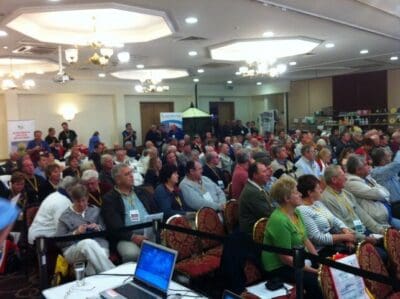
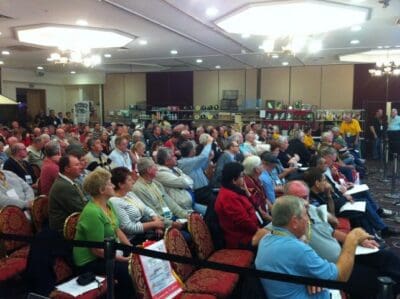
For exhibitors, it meant three representatives rather than the traditional smaller team had the opportunity to compete against Australia’s best. For spectators, it meant larger classes and considerably more birds to assess as the judges worked towards their final placings.
The ANBC historical record describes the three-bird concept as being very well received, although the use of three levels of judging staging could occasionally leave spectators wondering exactly where the judges had reached in the process.
As was customary, the odd-numbered classes were judged on Saturday and the even-numbered classes on Sunday.
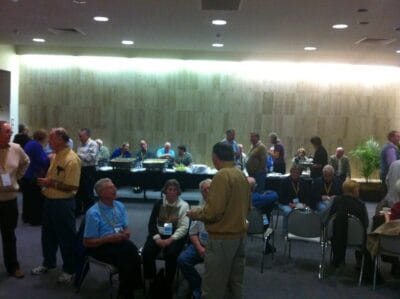
The scale of the competition can still be seen in the surviving results. Twenty-one birds appear through most of the classes, producing a National Championship quite different visually from what today’s competitors would recognise.
An International Judge on the Panel
Adding another international element to the weekend was Ghalib Al-Nasser of the United Kingdom, who joined Australia’s Jim Fletcher of Tasmania, Jean Painter of New South Wales and Alan Rowe of Victoria on the judging panel.
Al-Nasser and Fletcher judged together, while Painter and Rowe formed the second judging combination.
The presence of an overseas judge at the Nationals was no longer completely new by 2011, but on a weekend when the WBO had gathered in Australia, it reinforced the international flavour of the entire Championship.
Among the winners were some names that remain instantly recognisable to Australian fanciers.
R. Blizzard won the Normal Green for Victoria, the Welshman Family took the Normal Grey Green for NSW, Tim Gleeson won the Normal Blue and Brian Walters claimed the Normal Grey. Kakoschke & Rice delivered South Australia a National win in the Opaline class, while B & M Boal won the Spangle for South Queensland.
Two partnerships achieved the particularly difficult feat of winning twice during the weekend. Victoria’s Sheppard & Flanagan won both the Black Eyed Self and Crest classes, while Western Australia’s C & B Gearing took the Albino and Hen classes.
In all, the weekend produced 20 individual Logie-winning exhibitors, with those two partnerships accounting for the double victories.
Victoria Leads – Then NSW Strikes
By the end of Saturday, Victoria held a 14-point lead.
With half of the classes still to come, the title remained very much alive.
Sunday morning changed everything.
As the even-numbered classes progressed, New South Wales steadily reduced Victoria’s advantage. What had begun as a slender Victorian lead was gradually erased before NSW moved clear.
When the final calculations were completed, New South Wales had won the 2011 National title with 478 points, defeating Victoria by 31.
Victoria finished on 447, with South Queensland third on 404. South Australia accumulated 321 points, Western Australia 299, Tasmania 182 and North & Central Queensland 178.
It was precisely the sort of Sunday turnaround that makes the National teams competition so compelling.
The individual winners receive their Logies and deserved recognition, but every placing contributes to the bigger contest. A second, fifth, ninth or fifteenth place may ultimately become part of a National Shield victory.
In Canberra, NSW simply kept accumulating them.
Taking the Nationals to the World
Perhaps one of the easiest details to overlook today is just how technologically progressive parts of the 2011 event were.
Computerised results were being handled by Maureen and Andrew Bourne, assisted by Pat and Bill Sedgwick. Carol Gough entered the judges’ comments as they were delivered, with the information then passed to Luke Fletcher, allowing results and commentary to be transmitted to followers around the world. Rod Turnbull provided photography from the event.
Today, Australian fanciers expect National results, photographs, video and commentary almost immediately.
In 2011, this was still evolving.
The previous few years had seen the internet become increasingly important to the Nationals, and Canberra demonstrated the direction the event was heading. The audience was no longer restricted to those fortunate enough to find a seat in the judging auditorium.
The National Championship was beginning to become a truly national — and international — digital event.
Remembering Ross Loats
Canberra also included a poignant moment.
Victorian exhibitor Ross Loats, a great supporter of the National Championship who had accumulated six National wins, had passed away only two months before the event.
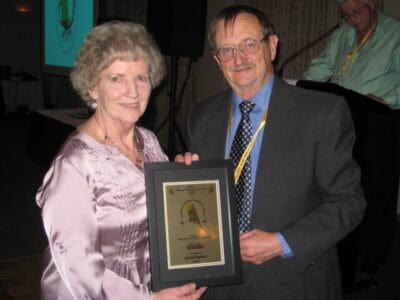
At the Delegates Meeting, a motion was passed to induct Ross posthumously into the ANBC Hall of Fame.
He was joined that year by Mark Chidel of NSW and Kakoschke & Rice of South Australia.
Four important figures from the foundations of the ANBC were also recognised on the Hall of Fame Honour Roll for service: Gordon Lowe of South Australia, Colin Morgan and Ron Hunt of NSW, and Barney Hackney of South Queensland.
It was a reminder that while the Nationals are always looking for the next champion bird, the weekend is equally about recognising the people who built the competition in the first place.
Decisions That Would Shape Future Nationals
The Monday Delegates Meeting ensured that Canberra 2011 would leave a legacy well beyond the birds judged that weekend.
Alan Baxter of Victoria was elected ANBC President, with Bob Bourke continuing as Secretary. Dave Butters became Public Officer, Leigh Downey remained Historian and Steve Campbell continued as Webmaster.
There was also considerable debate about the structure of future National Championships.
The three-bird-per-class experiment would continue into 2012 before a two-bird trial followed in 2013 and 2014. Additional classes were approved for introduction after 2012, and the National Championship date was set to move to the third weekend in June from 2013.
Other changes included removing the compulsory 16 mm perch requirement from the standard show cage and altering requirements surrounding the appointment of international judges.
Some of those decisions proved more popular than others.
But that, too, is part of ANBC history.
The National Championship has never remained completely static. Its format has continually evolved through trials, debate, successes and occasionally ideas that, with hindsight, were reconsidered.
A Nationals Worth Remembering
Canberra 2011 had almost everything.
There were 21 birds per class, an international judge, a dramatic Sunday turnaround, National class winners from across the country, a major Hall of Fame induction, developing live technology and significant decisions about the future format of the Championships.
Above all, there was the World Budgerigar Organisation.
For the first time, international delegates had travelled to Australia for the WBO Annual Meeting, placing the Australian fancy firmly on the world stage while many of those same visitors experienced the ANBC National Championship firsthand.
More than a decade later, many aspects of the Nationals have changed again. Technology has advanced, classes have expanded and the way people follow the event from home would have been difficult to imagine in earlier decades.
Yet the essential ingredients remain familiar — the anticipation before judging, the friendly rivalry between Zones, the celebration when a National winner is announced, and the friendships renewed each year by people brought together through a shared fascination with the budgerigar.
Canberra 2011 was a weekend when all of those traditions met the future.
And for one memorable National Championship, the Australian budgerigar fancy welcomed the world.
Source: ANBC History – 2011 Canberra, ACT and the official 2011 Australian National Budgerigar Championship Results.
 |
 |
 |
 |
 |
 |
 |
 |
 |
 |
 |
 |
 |
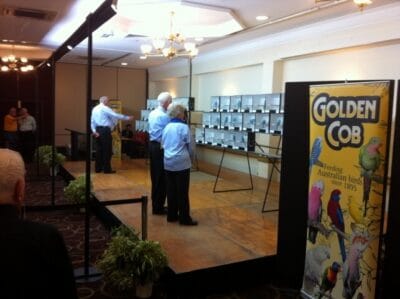 |
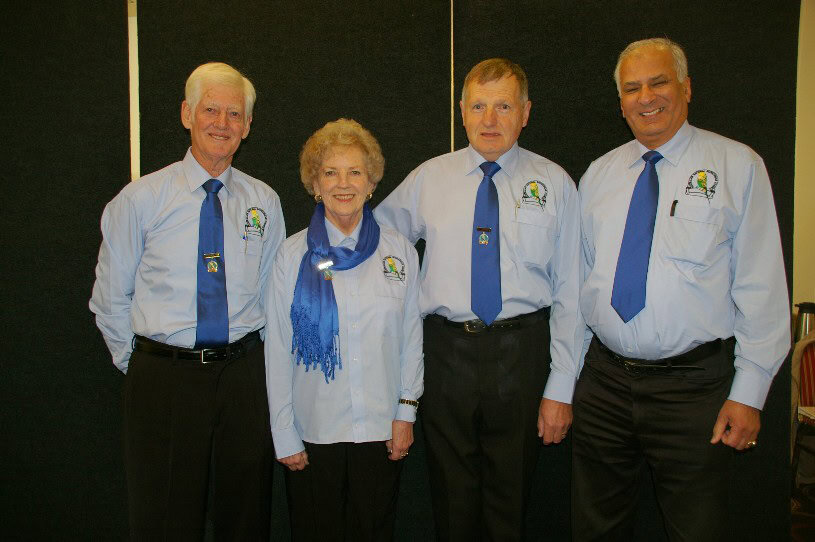
Alan Rowe, VIC; Jean Painter, NSW; Jim Fletcher, TAS; and Ghalib Al-Nasser, UK. |
 |
 |